University Park Solid Color Floors
A single color is the plainest floor we put down, and it tells on the concrete faster than anything else we install. University Park has plenty of older homes with older slabs, many of them in detached or alley-loaded garages that have collected decades of patches, paint and settling cracks. So most of a solid color job happens before the color comes out. Cody’s crew gets the slab flat, sound and even first, because one shade laid over a rough surface turns every flaw into a shadow.
Grinding an Old Garage Slab to One Even Profile
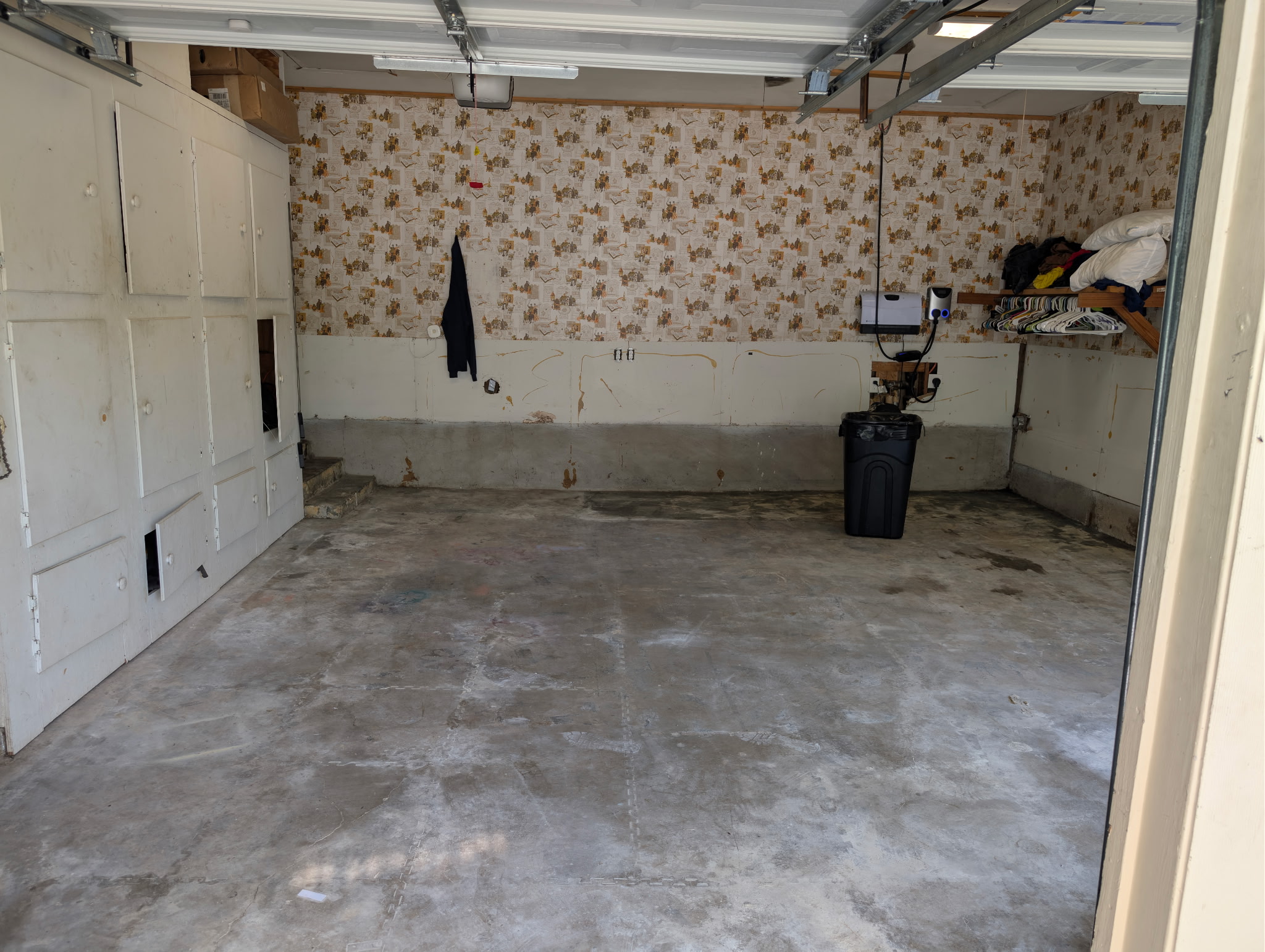
An old slab never wears evenly. The two strips where cars have parked for decades get polished smooth by tires, the corners stay rough, and there is often a coat of gray porch paint or a shiny sealer that a previous owner rolled across half the room. Lay a single color over that and it soaks into the rough parts while sitting on top of the slick ones. Once the topcoat cures, you see it as dull patches next to shiny patches, and no amount of extra resin evens it out.
So the grind comes first, and it takes everything off. Old paint and sealer come down to bare concrete. The worn tire lanes get opened up until they drink resin the same way the rest of the floor does. Edges along the walls, the step up to the house door and the corner behind the water heater get worked by hand with a smaller grinder, since the big machine cannot reach them, and a thin margin of untouched concrete is exactly where a solid floor starts to lift.
When we finish, the slab should look like the same dull gray from one wall to the other, with no glossy islands left. If it does not, we keep grinding.
Cracks That Should Never Show Through
University Park sits on the same DFW clay as the rest of Dallas County, and that clay swells when it gets wet and shrinks back as it dries. Older slabs answer with cracks: a hairline wandering off a corner, a wider one tracking along the joint line, sometimes a section that has dropped a little on one side. Under a broadcast floor you might never spot a repair. Under one flat color, a crack that was filled carelessly telegraphs straight through as a line you can trace from the driveway.
Each crack gets chased open first, so the filler has clean, sound edges to grab instead of crumbs. We fill it, let it set hard, then grind the repair down and feather it into the concrete on both sides until there is no ridge and no dip where filler meets slab. The joint lines get their own conversation. Some owners want them carried through as a visible line, which leaves room for the slab to move where it was designed to. Others want them filled and coated over for a cleaner look. Cody will tell you which he expects to hold on your slab, and what a repaired crack may look like after a few more Texas summers of the clay working underneath it.
Gray, Black or Something Lighter
Picking the color is the fun part, and it changes how the floor lives more than people expect. Mid and light grays are the forgiving choice. Dust, dried leaves and the fine film that blows in under the door all blend into them, so a gray garage looks clean for longer between moppings.
Black is the dramatic one. It looks rich around a white car or pale cabinets, and it also shows lint, pet hair and every footprint between the laundry room door and the trash bins. Anyone set on black should plan on keeping a dust mop hanging by the door.
Lighter colors earn their place in a dim room. If your garage or back room runs on one ceiling bulb and no window, a pale floor throws that light back up so you can actually find a dropped screw. A soft tan or warm white in a laundry room makes the space feel bigger with nothing else changed. Narrow it down to two or three samples, then look at them at night under your own bulbs and again in daylight with the door up. A shade that looked right on a small card can read quite differently across a whole floor.
What Happens on Coating Day
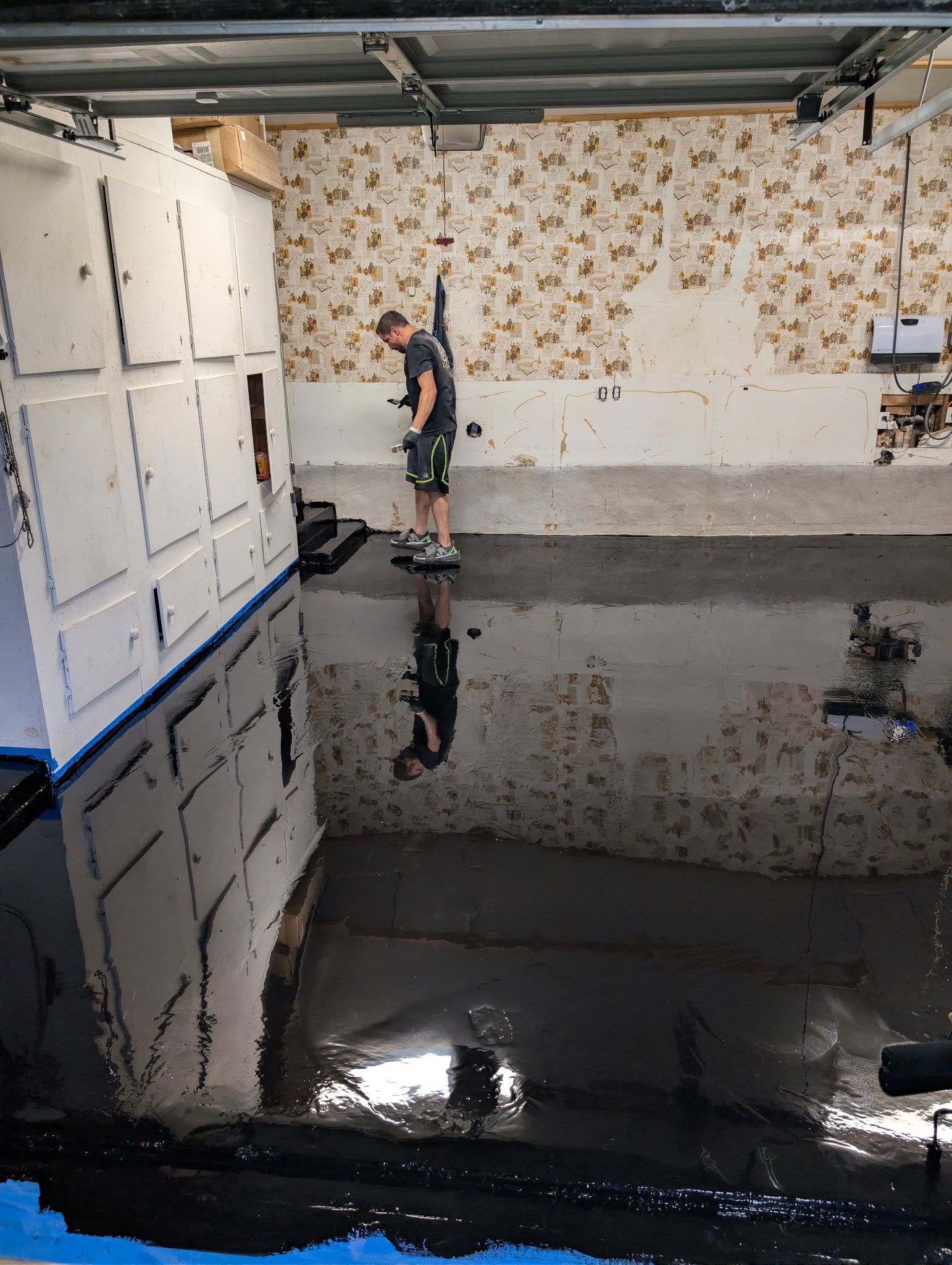
Primer goes down first, chosen for how thirsty your concrete turned out to be, so the color coat has an even surface to bond to everywhere. Then the color. A single shade has to go on at a full, steady thickness. A thin pass lets gray concrete ghost through in the low spots, and a heavy puddle in one corner can cure a slightly different tone than the rest. We pour it out in ribbons, spread it and back-roll it in one direction while it is still wet, keeping a wet edge moving across the room so no lap marks get locked in.
The topcoat is where you can ask for grip. A fine aggregate mixed into the clear coat gives bare feet and wet shoes something to hold without making the floor rough to mop. You choose how much: a light texture feels almost smooth, and a heavier one grips better but takes a little longer to clean. Texas summers turn a shut garage into an oven, so the topcoat we spec is one meant to stand up to hot tires and afternoon sun through an open door.
Show us the room before you settle on a color.
Cody looks over the slab, checks it for moisture and cracks, and you get a firm written price within 48 hours of the visit. Installs usually land two to three weeks out.
Laundry Rooms, Utility Rooms and Painted Shop Bays
A plain color is the right call more often than people expect. Laundry rooms and utility rooms take it well. A leaking supply hose wipes up instead of soaking into grout, the washer can be walked out for service without catching a tile edge, and a light shade makes a cramped room brighter.
If a detached garage doubles as your workshop, a single color makes the best base for it. Once the color cures, we can lay out lines in a contrasting shade to mark where the car parks, where the bench sits or where the mower lives, then run the clear topcoat over them so the lines stay sharp underfoot. On a busy chip floor, the same lines get lost.
We will also tell you when plain is the wrong answer. A garage that takes muddy dogs, kids’ bikes and two cars every day hides its life better under flake, and a room meant to look like a piece of art belongs to a metallic pour. Our solid color epoxy service page covers the system itself, and the gallery shows finished floors.
Solid Color Questions From University Park Owners
Should the joint lines be filled or left showing?
Either can work. A joint carried through as a clean line gives the slab a place to move, and on clay soil that matters. Filling it and coating over gives a smoother look, with some risk a hairline returns along it. Cody tells you which he would choose for your slab.
Why do the worn tire lanes need extra grinding?
Decades of tires polish those two strips smoother and denser than the rest of the slab. Left that way, they take primer differently, and a single color can cure duller or shinier there. Grinding opens them back up so the whole slab takes resin evenly before any color goes on.
Which color hides dirt the longest?
A mid or light gray. Dust, leaves and the film that drifts under a garage door blend into gray, so the floor looks clean between moppings. Black looks rich but shows lint, pet hair and footprints almost right away, and very pale shades show tracked-in mud.
Can the floor be made less slippery?
Yes. We can mix a fine aggregate into the clear topcoat, which gives wet shoes and bare feet more grip. A light texture still mops easily, and a heavier one grips better but takes a bit more effort to clean, so we help you pick the amount for the room.
Is a solid color floor a good fit for a laundry room?
It is one of the best uses for it. Water from a leaking hose wipes right up, there is no grout to stain, and a light shade brightens a small room. We prep the slab the same careful way we would in a garage, since one color shows every bump underneath.
Can you paint parking or bench lines on it?
Yes, and a single color is the best background for them. After the color cures we lay the lines out in a contrasting shade, then the clear topcoat goes over everything, so the lines wear the same as the floor and stay sharp for the car, the bench or the mower.
More Floors Around University Park
Not sure one color suits the room? Talk to us and bring the question to the walk; we will lay samples on the slab and look at them together.
Where University Park Sits on Our Route
University Park sits right beside Dallas and Highland Park, with SMU near its middle, and our crew drives in from Dallas for jobs across its older blocks. The University Park page lists every system we offer in town, and our Dallas County page covers the neighbors.