McKinney Flake Epoxy
Chip floors are what most McKinney garages actually need. The vinyl flake bed hides tire scuff, trowel marks and the general mess a garage collects, and the polyaspartic clear over it wipes down with a mop. Cody builds them the long way, ground slab and full broadcast, whether the house sits off Virginia Parkway or out on the north end of 75.
What a Chip Floor Actually Is
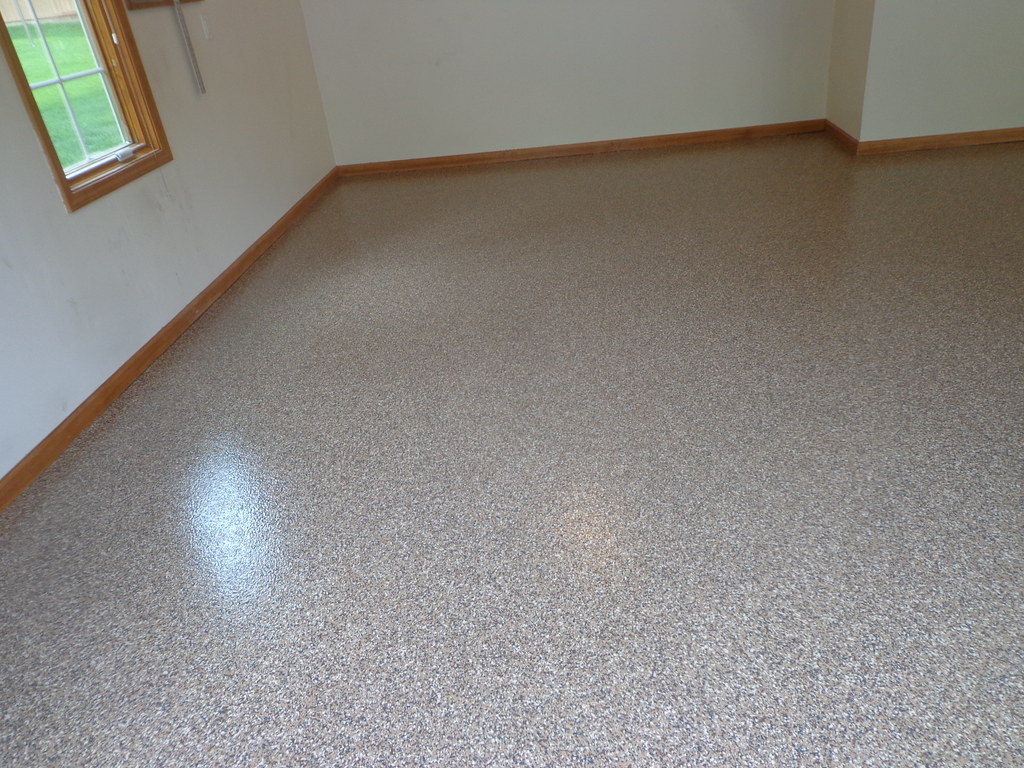
A flake floor is colored vinyl chip thrown into a wet epoxy base and then sealed under a clear polyaspartic. That is the whole idea. The chip does the hiding, the epoxy does the holding, and the clear coat does the wearing. Take any one of those three away and you have a floor that looks fine in June and is peeling by the following spring.
The first choice we make together is full broadcast or partial. Full broadcast means we keep throwing chip into the wet base until the base will not take another flake, so you end up with a solid wall of color and zero base showing through. That is what most McKinney garages get, because it reads as a finished floor and it forgives everything. Partial broadcast lays the chip lighter and lets some of the base color show between flakes, which gives a softer, more speckled look. It costs less material and it is a legitimate choice, but it shows wear patterns sooner in a garage that gets worked in.
Chip size matters more than people expect. Quarter-inch flake is the standard and gives you that classic granite-looking garage floor. Eighth-inch reads finer and more uniform, closer to a solid surface from standing height, and it works well in a laundry room, a mudroom or a home gym. Half-inch and bigger gets bold and architectural, and it suits a shop floor or a space where somebody wants the floor to be part of the design instead of just the ground. Cody brings sample boards out so you can set them on your own slab in your own light before anything gets ordered.
McKinney gives us a wide spread of slabs. The Stonebridge Ranch garages are twenty and thirty years into their life now, so they usually have some settlement cracking, a few oil stains soaked deep, and a slab that has already told us where it wants to move. Those get crack chased and filled before any coating goes down. Trinity Falls and the newer builds up north are the opposite problem: clean slabs, but green concrete with a hard troweled skin and construction moisture still working its way out. Craig Ranch sits somewhere in the middle, and the older houses around the downtown square have the oldest concrete we touch in the city, sometimes poured thin and patched more than once.
Collin County clay is the common thread under all of it. The soil here swells when it rains and shrinks when it bakes, and a garage slab riding on that gets pushed around a little every year. That is why hairline cracks show up in houses that are otherwise perfect. A flake system does not stop the ground from moving, but the base coat and the flexible fill we use in the cracks keep the surface tied together, and the chip layer makes small movement invisible instead of a line running across your garage.
How We Build It
Day one starts with a diamond grinder, not an acid bottle. We open the slab, chase out the cracks and fill them, then vacuum the dust down to nothing. The epoxy base goes on next and we work fast, because the whole crew is throwing chip into that base while it is still wet, tossing it up and letting it fall flat so it lands even instead of streaked. We broadcast to refusal, meaning we keep going until the floor rejects more flake. Overnight it cures, then we scrape the whole floor to knock down the loose chip and the sharp edges standing up, sweep it clean, and roll the polyaspartic clear with aluminum oxide grit worked in for traction. Cured means walk it at 24 hours and park on it around 72.
Where McKinney Puts Chip Floors
Garages are the bulk of it. Two-car, three-car, the deep tandem bays in some of the newer Trinity Falls plans. After that it is home gyms, which is the fastest growing use we see, because the chip texture takes dropped plates without showing every ding and the clear coat handles sweat and rubber mats. Then workshops, laundry and mudrooms, and light commercial around the square where a shop owner needs something that survives foot traffic and still looks intentional.
Traction is worth talking through before we pick a grit level. A McKinney garage gets wet from washing a truck, from a spring storm blowing in the open door, and from whatever comes off the tires in February. Smooth coating plus water is slick. The flake texture already breaks that up and the grit in the topcoat adds the rest. We dial it up for a working shop and back it off for a clean showroom garage where somebody is walking barefoot to the trash can.
Let’s look at your slab.
Send a few photos of the space and we will tell you straight what it needs before anybody drives out.
McKinney Flake Epoxy Questions
Full broadcast or partial, which should I pick?
For a garage, full broadcast almost every time. It hides more, wears more evenly, and you never see the base color peeking through as it ages. Partial makes sense when somebody wants a lighter speckle and the room is not taking daily abuse, like a laundry room or a finished storage space.
What chip size works best in a garage?
Quarter-inch is the workhorse and it is what most McKinney garages get. Eighth-inch reads finer and suits interior rooms and gyms. Half-inch and up makes a bold statement in a shop. We set sample boards on your slab so you are choosing in your own light, not off a screen.
My Stonebridge Ranch garage has cracks. Is it too far gone?
Almost never. Settlement cracking in an older Collin County slab is normal, and we chase every crack open, fill it, and grind it flush before the base coat goes down. What actually disqualifies a slab is active moisture pushing up from below or concrete that has spalled to gravel, and both of those we check for on the visit.
My Trinity Falls house is brand new. Can we coat it right away?
New concrete needs to be cured out and tested first, because construction moisture still moving through a green slab will lift a coating from underneath. Once it passes, a new slab is a great candidate. It still gets the full diamond grind, since that troweled factory finish is exactly what a coating cannot bond to.
How long does it take and when can I park on it?
Most McKinney garages are a two-day job, grind and base with the chip broadcast on the first day, scrape and topcoat on the second. Walk on it after about 24 hours from the final coat and park on it around 72. We keep an eye on the weather window because heat and humidity both move cure times.
Other McKinney Epoxy Work
All McKinney, TX services · See finished floors · Talk to us