Highland Park Epoxy Shower Floors
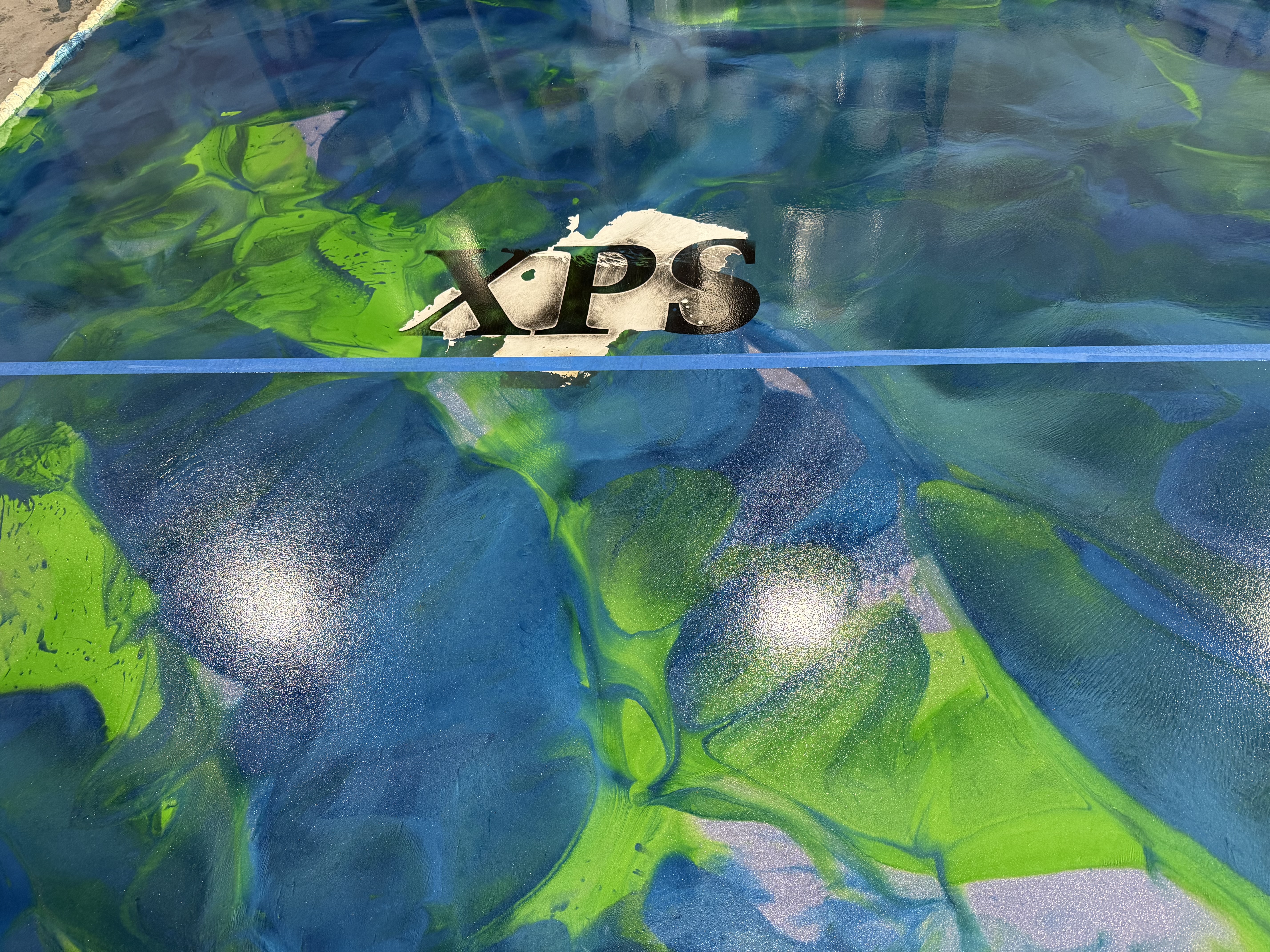
An older shower usually tells on itself: grout that stays dark however hard it gets scrubbed, a corner that crumbles, a curb somebody has patched more than once. We take that floor out and pour a one-piece epoxy pan in its place, sloped to the drain and finished with grip for wet feet. The photo beside this is a practice pour from Cody’s XPS certification training, not a shower floor. What sits under your old tile decides the plan, so Cody looks before he promises anything, and the price comes back fixed and in writing.
What Cody Checks Before Anyone Picks a Color
The first visit happens with the water off and a flashlight on. Cody taps the old floor, because a hollow sound means the tile has let go of its bed, and in a shower that usually means water has been getting underneath for a while. When the old pan and its bed are tired, they come out, so the real question is what waits below them: a sound slab or subfloor, or framing that has been soaking. He checks the baseboards outside the shower, and the ceiling under a second-floor bath, for stains that tell the same story.
Then the drain. On a poured pan the drain goes in before any epoxy does, so Cody looks at where yours sits now, how the plumbing reaches it, and whether you want a center drain or a linear channel along one wall. A linear drain lets the whole floor tip one way, which is what makes a walk-in or curbless layout practical, and it is often the point where people start rethinking the whole shower.
Last come the walls and moisture. We look at where the new pan will meet the walls and whether the curb stays, and we take moisture readings, since a substrate that has held water behind old grout for years has to dry before a membrane goes on it. On the ground floor of a Highland Park house, the bathroom rides the same Houston Black clay as the garage does, so we also look for cracks running under the shower from the rest of the room.
Wet Bare Feet Decide the Texture
A glassy finish looks wonderful in a photograph and turns slick the moment soap and water land on it. So every shower pan we pour gets slip grit in the topcoat, and the real decision is how much. A fine grit gives a wet heel something to hold while still feeling smooth enough to stand on for a long shower. A heavier broadcast grips harder and takes a bit more scrubbing to keep clean.
We carry sample boards with each texture on the walkthrough, and the best test is the obvious one: wet the board, step on it barefoot, and decide. Households with older family members or small children usually lean toward more grip. A guest bath that sees a shower once a month can go finer. Either way the grit lives in the topcoat itself, so it does not wear away as a separate layer.
Color and look come after grip. A single solid color reads cleanest in a small room, and a quiet flake can work where the bathroom has space for it. Cody’s XPS training sits behind every prep we do, and each shower we take on comes with a fixed-price quote and a written workmanship warranty.
Built From the Drain Up
Grout lines are where showers get dirty and where water finds its way down, and a poured pan has none. Once the old tile and bed are out and the substrate is sound and dry, the drain gets set first, at its finished height, so everything after it can be shaped to meet it. Then a waterproof membrane goes over the prepped substrate. If anything above it ever fails, that membrane is what keeps water out of the framing, and the epoxy poured on top becomes a second barrier.
Slope comes before color, every time. The pan is poured with a steady fall toward the drain from each corner, and we prove it with a level and a bucket of water before the topcoat goes on. Old grout lines could hide a shallow spot; one smooth surface hides nothing, so a puddle by the back wall would show up the first morning. With a linear drain the floor can fall in one direction, which is how a curbless entry keeps water off the bathroom floor.
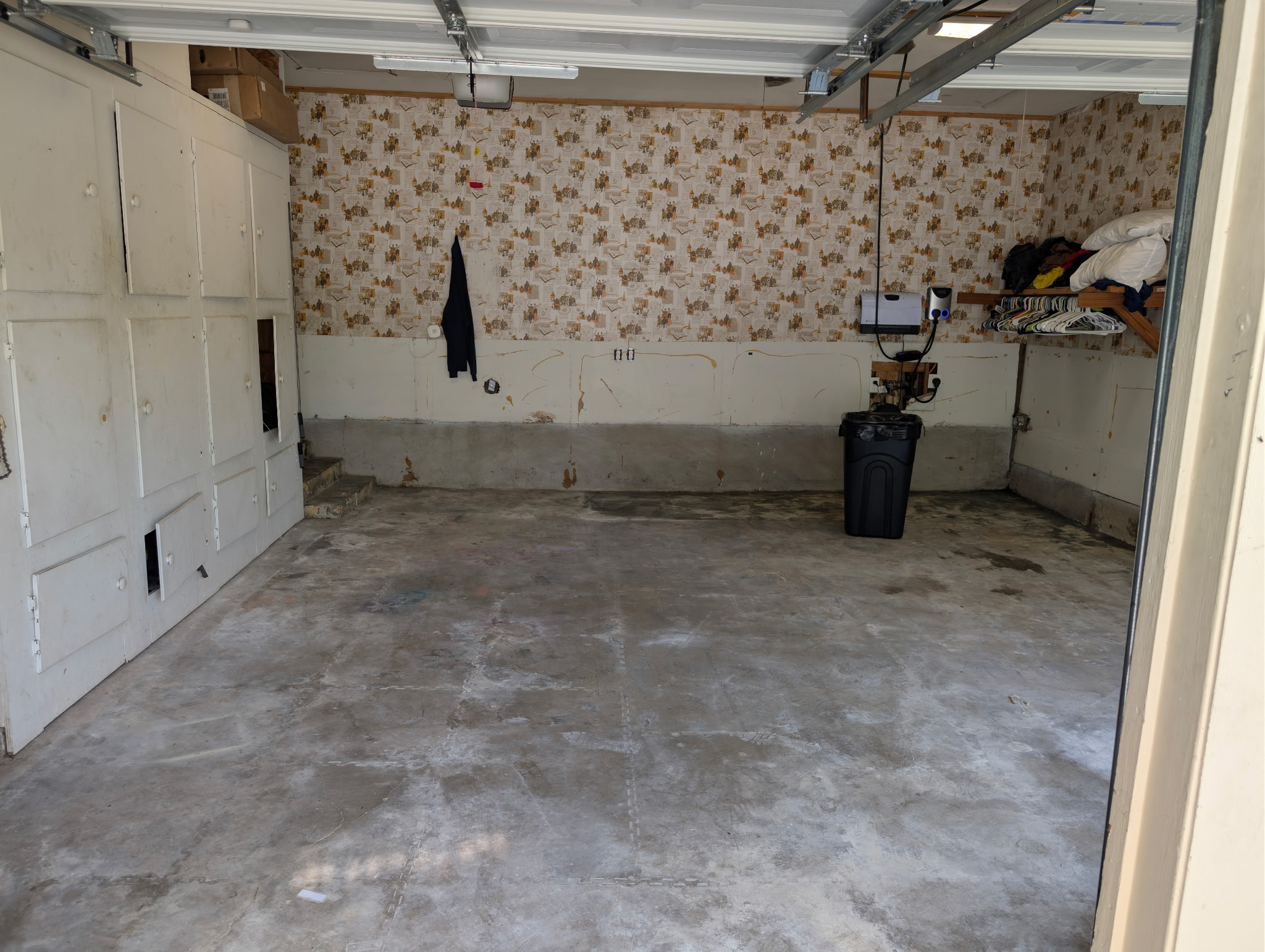
Where the pan meets the walls, the pour turns up a short way as a cove, so that inside corner carries no joint. If you keep a curb, it gets poured as part of the same pan. Cracks in the slab get chased open and filled instead of painted over, and the room’s temperature and humidity get read again right before the pour. We hold a bathroom to the same discipline as the garage slab pictured below.
Cure Time, Then Mild Soap
For most families the hardest part of a new shower floor is staying out of it. The pan has to cure fully before hot water and soap sit on it, and a shower used too soon can cloud or soften. When we finish, we tell you when it can take water, which depends on the products used and the temperature in the room. Plan on another bathroom until then.
After that, cleaning is simpler than tile ever was. A soft brush or sponge with a mild, pH-neutral cleaner handles the daily soap film. Skip scouring powders, abrasive pads and harsh acid cleaners, which dull a topcoat faster than water ever will. There is no grout to seal, regrout or bleach, which is the reason most people call us in the first place.
Does the floor sound hollow when you tap it?
That, a puddle that never quite drains, or a stain on the ceiling below is worth a call. Cody comes out, looks it over, and puts the price in writing.
When We Tell You Not to Pour Yet
Some bathrooms are not ready, and we would rather walk away from a job than pour a pan that will fail. Rotted subfloor or joists under the shower, a supply or drain line that is leaking, or a slab crack that is still moving all need a plumber or carpenter before epoxy makes any sense. If Cody finds one of those, he shows you what he found and tells you what has to happen first. Once the base is sound, we come back.
When the answer is yes, Cody looks at the shower, takes his readings, lays texture boards on the bathroom floor and talks color with you in the room’s own light. The quote that follows is one fixed number, itemized line by line, and it does not move once the grinder comes out unless you change the scope. Our epoxy shower floors page explains the system in more depth, and the project gallery shows finished work.
Shower Floor Questions From Highland Park Homeowners
Does the old tile have to come out?
In an older shower, almost always. The tile and its mortar bed come out so the drain, the membrane and the slope can all be built right from the substrate up. Pouring on top of them would leave whatever they are hiding sealed underneath the new floor.
Will a poured shower floor be slippery?
Not with the texture we build into it. Fine aggregate goes into the topcoat so a wet bare foot holds. You pick the amount on the walkthrough by wetting a sample board and standing on it. More grip means slightly more scrubbing, so most people settle in the middle.
How long before we can shower again?
Longer than most people expect. Hot water and soap need a fully cured pan, so we tell you when it can take water, based on the products and the room temperature. If it is your only shower, mention it early and we will plan the job around that.
Can the new shower be curbless?
Often, yes, and a poured pan is one of the better ways to build one. A linear drain set along one wall lets the floor fall in a single direction and meet the bathroom floor with no step. Whether it works in your house depends on the slab or framing under the bathroom, which we check on the walkthrough.
Which cleaners are safe on the new floor?
Use a soft brush or sponge and a gentle cleaner without acid or grit. Scouring powders, abrasive pads and strong acid products dull the topcoat over time. With no grout to seal or bleach, the weekly cleaning takes noticeably less time than the old tile did.
Is there a shower you would turn down?
Yes, for now. Soft framing under the floor, a leaking supply or drain line, or a slab crack that keeps moving all have to be fixed first. We show you what we found, explain who should repair it, and come back to pour once the base is sound.
More Highland Park Epoxy Work
Photos of finished floors live in our gallery. To have Cody come look at your shower, ask for a walkthrough.
Highland Park Bathrooms We Reach
We pour shower floors in every part of Highland Park, and our Highland Park page lists the rest of what we install in town. Sherwoods is based in Dallas, most quotes go out within 48 hours of the call, and Highland Park sits inside our regular Dallas County run, so we batch jobs here whenever the calendar allows.