Epoxy Pool Decks for Highland Park Backyards
Bare concrete around a pool gets hot enough in a Highland Park August that kids sprint from the towel to the water. A heat-reflective epoxy deck takes the sting out of that walk and adds texture so wet feet stay put. The concrete underneath still sits on clay that moves, so the cracks and joints get dealt with before anyone talks about color. Cody walks the deck, reads the slab and hands you a fixed number on paper.
Heat Comes First on a Texas Pool Deck
Concrete soaks up afternoon sun and holds onto it, and by late summer the trip from the back door to the pool steps can burn. The topcoat we spec for pool decks is heat reflective, and in direct sun it stays 20 to 30°F cooler than bare concrete. That gap is the difference between tiptoeing and walking normally, and it matters most to whoever spends the whole afternoon out there barefoot.
Color helps the topcoat do its job. A pale tone throws back more sun than a dark one, so we steer pool decks toward lighter blends and set sample boards out on your actual deck in the afternoon, where you can put a hand on each and feel which runs warmer. If your heart is set on a darker deck, we will do it, and we will tell you up front that it will be hotter underfoot.
Grip matters just as much. Water, sunscreen and bare feet make any smooth surface slick in a hurry, so the deck gets a slip-safe texture broadcast into the coating, usually a little heavier near the steps and along the coping where people climb out wet. The goal is a deck you can lounge on comfortably all afternoon that still catches a wet foot coming down fast.
Coping, Drains and the Edges That Fail First
Most pool deck coatings that come loose start at an edge. Along the water, we cut a clean termination line at the coping and seal the coating against it, so it stops neatly instead of feathering onto the stone, where it would lift and peel. Stone and tile coping move differently from the slab beside them, so we leave the coping uncoated unless it is concrete and part of the plan from the start.
Deck drains get the same attention. We carry the coating into the drain channel so water sheets off it and away, and the grates come out and go back clean. Where the deck meets the house wall, a fence post or a planter, we finish to a sealed edge rather than a ragged line. Water working in under an edge is the most common way a coated deck begins to lift, so edges get more of our time than open field does.
You will not spot any of it in a photo of a finished deck, yet it decides whether the deck still looks right a few summers from now. Every deck we coat comes with a written workmanship warranty, a price that does not move once we start, and the XPS-certified prep Cody trained for.
Houston Black Clay Under the Deck
Highland Park sits on Houston Black clay, which swells when it gets wet and shrinks as it dries. A pool deck is a wide, thin slab resting right on that ground, often with sprinklers soaking one side and a dry bed on the other, so it cracks and shifts more than most concrete around a house. Cracks on a deck call for careful prep, and they rarely rule the deck out.
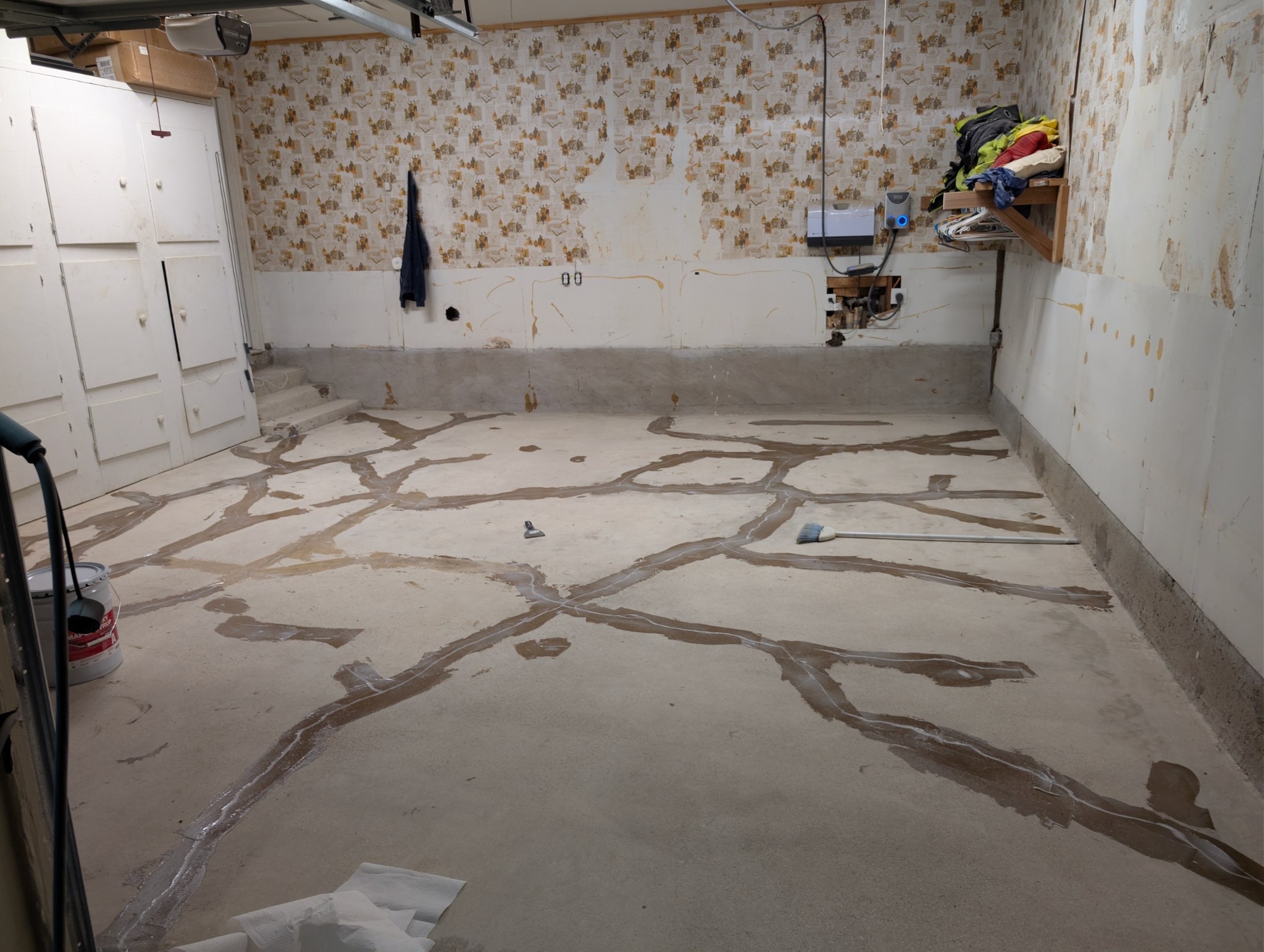
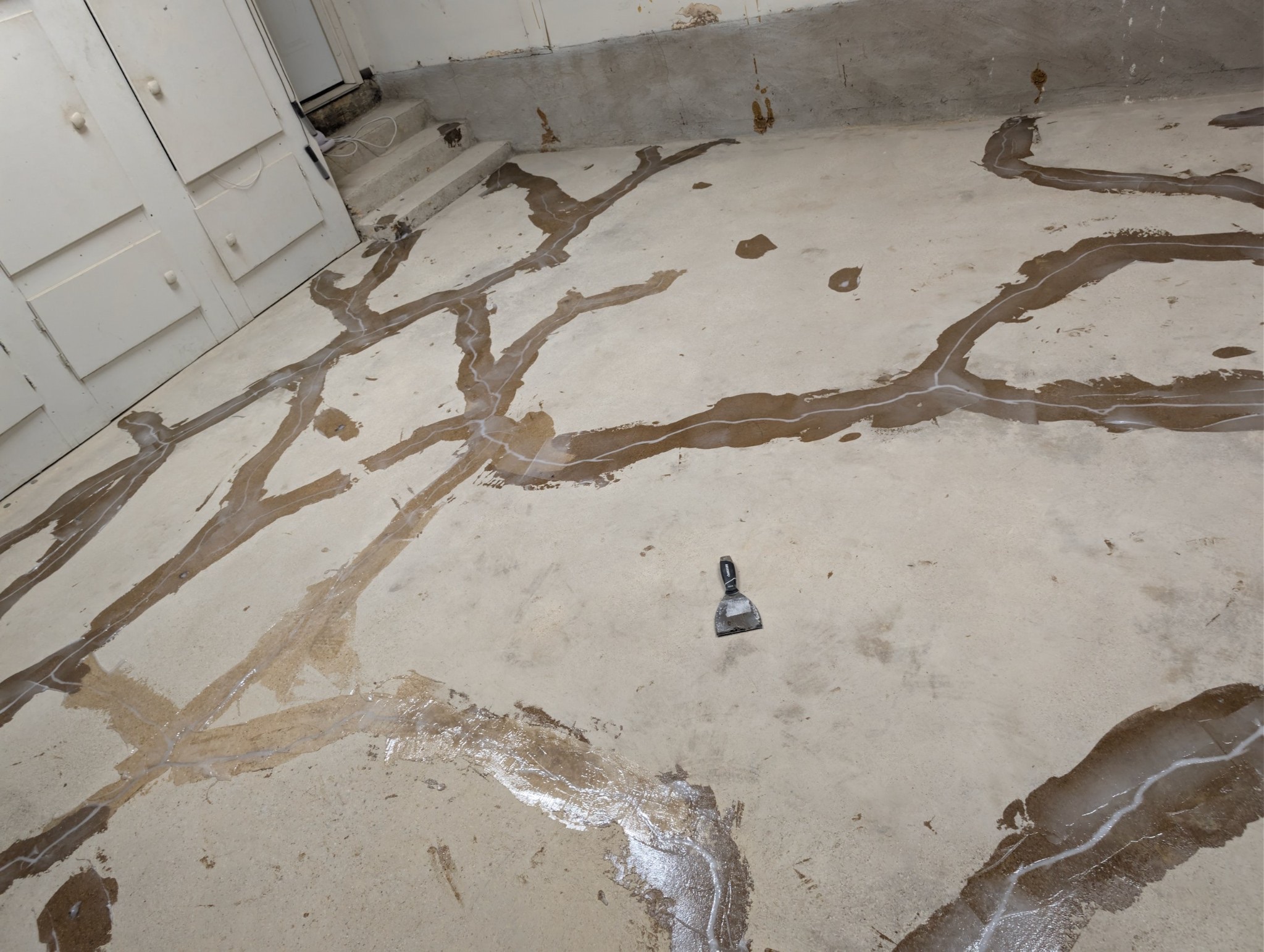
Every crack gets chased mechanically, opened up and filled with repair material before the first coat goes down, the same way the slab in the photos on this page was handled. Where the movement calls for it, we add crack isolation so the coating flexes with the concrete under it. Control joints are respected: they stay open as joints in the finished deck, filled with a flexible material, because a joint coated over blind will crack straight back through the new surface the first time the clay moves.
We also look for spots where the deck has settled toward the pool or toward the house. Water that stands in a low spot is hard on any finish, and it is far easier to talk about before the coating goes down than after.
Picking a Window Between Swim Season and Rain
A coated deck needs dry concrete, a dry forecast and a stretch with nobody walking on it, which means the pool is out of use while we work. Most families would rather that happen before the pool opens for the year or after it closes than in the middle of July. Spring and fall bring rain, so we watch the forecast closely, and if a storm is on the way we move the date before we would ever coat a damp slab.
Heat matters even inside a good window. A deck in full sun runs far hotter than the air, and coating chemistry follows the temperature of the concrete, so on warm days we start early and stop before the slab gets too hot to work. Most installs schedule within two to three weeks of the call, and if weather pushes a date, you hear it from us as soon as the forecast turns.
Pick a week the pool is already closed.
We will fit the work to your season, walk the deck, check every crack and joint, and give you the price on paper before anything is scheduled.
Keeping the Color and the Grip for Years
The topcoat is UV stable, so a Texas summer does not turn the deck yellow or chalky. Upkeep is a garden hose and, now and then, a mild cleaner with a soft brush to lift sunscreen, pollen and leaf stains. Keep a pressure washer on a wide fan tip, and rinse off any splashed pool chemicals rather than letting them sit. Over time the busiest paths dull, usually first at the steps, and the deck gets a light scuff and a fresh topcoat instead of a full redo.
All of that gets laid out on the first visit. On the walk, Cody measures the deck, maps the cracks and the control joints, notes where the coping and drains need edge work, and looks for low spots that hold water. The price comes back line by line, in writing, so you can see where the prep goes and why. There is no starting-at fine print, and the number holds once work begins. The epoxy pool decks page covers the whole system, and the gallery has finished work to look through.
What Highland Park Pool Owners Ask Us
How much cooler will the deck feel?
In direct sun, the heat-reflective topcoat stays 20 to 30°F cooler than bare concrete. Lighter colors help it work, so we usually steer toward paler blends and set sample boards out on your deck in the afternoon, where you can feel the difference with your own hand.
Our deck is full of cracks. Can it still be coated?
Usually. Decks here sit on clay that moves, so some cracking is expected. We chase each crack mechanically and fill it, add crack isolation where the slab needs it, and keep the control joints open as flexible joints instead of coating straight over them.
Will the coating be slick when it is wet?
No. A slip-safe texture is broadcast into the coating so wet bare feet hold. We typically run it a little heavier near the steps and the coping, where people climb out of the water, and you can test the boards barefoot before choosing.
When is the best time of year to coat a pool deck?
Before the pool opens or after it closes, so you are not giving up swim days. We need a dry slab and a dry forecast, which means spring and fall dates can shift with the rain. Most installs land on the calendar within two to three weeks.
How do we take care of it?
Rinse it with a hose, and every so often scrub it with a mild cleaner and a soft brush. Do not let pool chemicals sit on the surface. When the busiest paths start to look dull, a light scuff and a fresh topcoat bring the finish back.
What happens where the deck meets the coping?
We cut a clean edge and seal the coating against the coping instead of feathering it onto the stone, where it would lift. Drains get the coating carried into the channel, and the grates come out and go back clean. Edges are where deck coatings fail, so they get the most care.
Beyond the Backyard
Want to see decks and floors we have finished? Browse the gallery, or ask Cody to come out and look at yours.
Covering Every Highland Park Backyard
Pool decks are common across Highland Park, and we coat them anywhere in town; the Highland Park page lists everything else we install there. We come from Dallas and group Highland Park jobs together when we can, which sometimes opens up a sooner date. The town is part of our regular Dallas County territory.