Irving Polyaspartic Coatings
Polyaspartic is the modern alternative to traditional epoxy clearcoats. UV-stable for Texas sun, chemical-resistant for shop floors, fast-curing for tight install windows. Sherwoods installs polyaspartic across Irving and Dallas County.
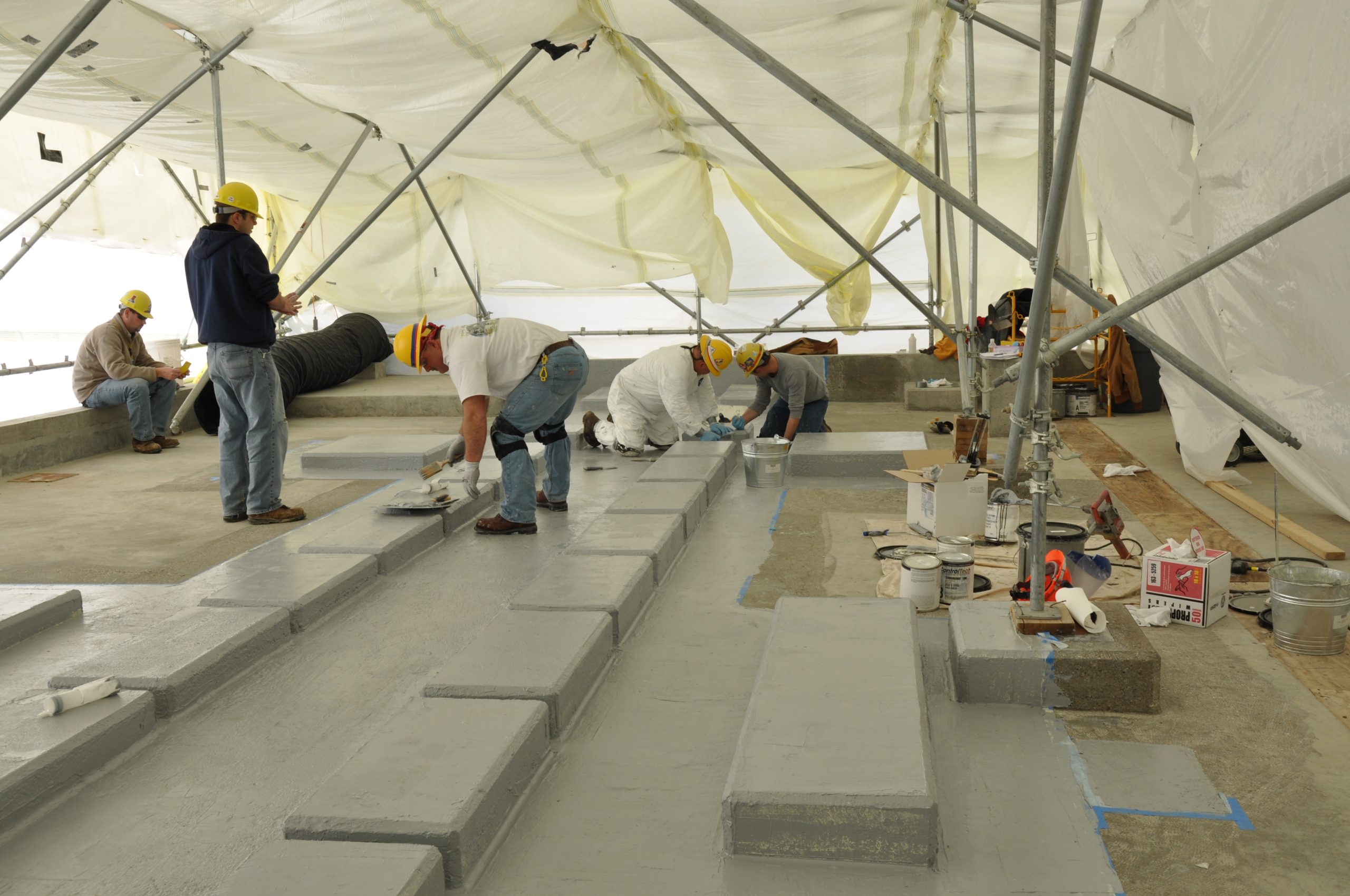
Irving Polyaspartic Coatings
Polyaspartic is a two-component aliphatic polyurea, which is a technical way of saying it is a tougher, faster, more UV-stable cousin of epoxy. It cures through a reaction with moisture in the air rather than slowly hardening over a day, so the recoat window is measured in about ninety minutes instead of the twelve to twenty-four hours epoxy needs between coats. That is the property that makes a real one-day floor possible without cutting corners. It also does not yellow in sunlight, which matters a great deal in Texas.
The trade-off is cost. Polyaspartic materials run roughly forty to sixty percent more than epoxy, so it is not the answer for every layer of every floor. What Cody does is put it where it earns that premium. On most Irving residential floors that means an epoxy-and-flake base sealed with a polyaspartic clear topcoat, which gives you the UV stability and the fast turnaround exactly where the wear and the sunlight hit, without paying for a full polyaspartic build you do not need.
Where polyaspartic really pulls ahead is the situations Irving throws at a floor. A garage with a door that stays open half the day gets direct sun on the slab, and a lesser clear coat ambers under that. A commercial showroom with big windows has the same problem. Light-industrial and warehouse floors get the chemical resistance, and any time-critical commercial job gets the fast return-to-service. Cody matches the build to what your floor actually deals with rather than selling one package for everything.
Where Polyaspartic Wins
There are two ways we use polyaspartic on an Irving floor, and the right one depends on the job. The topcoat-only build is the most common on residential work: an epoxy primer and flake broadcast for the body and color, then a polyaspartic clear over the top to handle the UV and the wear. It gives a homeowner the best of both, epoxy’s build and adhesion underneath, polyaspartic’s toughness and clarity on the surface, at a sensible cost.
The full polyaspartic build, where the primer, color, and topcoat are all polyaspartic, is the one we reach for when time is the deciding factor. Because every layer cures fast, a commercial floor can go from bare slab to back-in-service overnight. That is worth the extra material cost for a retail space, a shop, or a facility that cannot afford a weekend of downtime, but for a home garage it is usually more than the situation calls for. Cody talks through both so you are paying for the build your floor needs.
The UV stability is the piece Irving homeowners feel the most, because so many garages here run with the door open through the afternoon. That is hours of direct North Texas sun on the floor, and a cheaper epoxy clear ambers under it, shifting from clear to a yellow-brown tint over a season or two. Once that starts there is no cleaning it out. Polyaspartic holds its clarity in the same sun, so the flake or color underneath keeps reading the way it did on install day. On a light-colored floor that difference is stark, and it is a big part of why the topcoat is worth what it costs.
Chemical resistance is the other everyday advantage in a working Irving garage. Oil, gas, antifreeze, brake fluid, and the ammonia in household cleaners all end up on a garage floor, and a bare or poorly coated slab soaks them in and stains. Polyaspartic shrugs them off, so a spill wipes up instead of leaving a permanent mark. Add the aluminum-oxide grit worked into the topcoat for grip when the floor gets wet, and you have a surface built for how a garage actually gets used, not just how it looks in a brochure. That match between the material and the real conditions is what Cody is spec’ing for on every job.
Texas Conditions
The same fast cure that makes polyaspartic great is also what makes it demanding to install, and this is where experience shows. On a 100-plus-degree Irving summer afternoon, polyaspartic can flash-cure too quickly, setting before the crew has had time to lay it out evenly, which leaves lap marks and an uneven finish. Cody manages that by starting early in the day when the slab is cooler, and by tenting or shading the work area when the sun is on it, so the product goes down at a temperature it can actually be worked at.
Humidity actually helps here, since polyaspartic cures on moisture, and Irving’s air gives it what it needs. Cold is rarely the issue this far south, but on the odd winter job we hold installs to slab temperatures above about 40 degrees so the chemistry behaves. The point of all of it is that a polyaspartic floor is only as good as the conditions it was installed under, and reading those conditions is the part a discount crew running the clock tends to get wrong.
Ready for Irving polyaspartic?
Call us, send a message, or browse our gallery to see real Irving projects.
Irving Polyaspartic Coatings FAQ
Irving Polyaspartic FAQ: Lifespan?
20-30 years residential, 15-25 commercial.
Irving Polyaspartic FAQ: Yellowing?
No. Aliphatic polyaspartic stays clear.
Irving Polyaspartic FAQ: Slip-resistance?
Aluminum-oxide grit added to topcoat.
Irving Polyaspartic FAQ: Chemical resistance?
Resists oil, gas, antifreeze, brake fluid, ammonia cleaners.
Is a full polyaspartic floor worth it over an epoxy base?
For most Irving homes, no. A polyaspartic clear topcoat over an epoxy-and-flake base gives you the sun resistance and toughness where it counts without the cost of an all-polyaspartic build. The full build makes sense when you need the whole floor back in service fast, which is a commercial concern more than a residential one. Cody will tell you honestly which one your floor needs.
Why does the install have to start early on hot days?
Polyaspartic cures fast, and on a 100-degree Irving afternoon it can set before it is fully spread, leaving marks. Starting early with a cooler slab, and shading the work area when the sun is on it, keeps the product workable so the finish comes out even. It is a small scheduling thing that makes a big difference in how the floor looks.
Can polyaspartic go over my existing epoxy floor?
Sometimes, if the existing floor is sound and passes an adhesion check. If the old coating is lifting or was put down over poor prep, it has to be ground off first, because a new topcoat only holds as well as the layer beneath it. We check before we quote so you are not paying to coat over a problem.
Service Area: Irving, TX
We install polyaspartic systems across all of Irving, residential garages in the older south and east neighborhoods and the newer builds in Valley Ranch and Las Colinas, along with commercial and light-industrial floors near DFW Airport and along the Belt Line corridor. Sherwoods is Dallas based, so Irving is a short run, and we serve the surrounding Dallas County suburbs and the wider DFW metro from the same shop.