Highland Park Quartz Epoxy
Quartz is the floor we build when you want texture you can feel. Colored quartz sand goes into wet resin by the bucket until the coat will not take another grain, then the whole step happens again, and a grout coat and a topcoat lock it all down. In an older Highland Park house that build earns its keep in a back-entry room, a garage or a covered porch slab, the places where wet shoes and dog paws land first. Cody walks the space with sample boards before anything goes on the calendar.

How a Double Broadcast Goes Down
A quartz floor is built in layers, and each one has a job. First come the primer and the base coat, back-rolled to an even thickness across a slab we have already ground to the right profile. While that coat is still wet, we throw colored quartz sand into it by hand until it stops sinking in and the whole surface goes dry and sandy. Installers call that broadcasting to refusal. Once it cures, the loose grains get swept and vacuumed off and the floor is scraped down to knock off any high points.
Then we do it a second time: another body coat, another broadcast to refusal. Two passes give you a dense, even field of color and real build thickness, which is where the name double broadcast comes from. After that comes the grout coat, resin squeegeed and rolled over the sand so it fills the gaps between grains. The grout coat decides how the floor feels. Lay it heavier and the surface comes out with a gentle orange-peel texture. Lay it lighter and you keep more grip.
The last layer is the topcoat, chosen for sunlight and for the heat a Texas garage holds through the summer. Under bare feet the finished floor reads like fine sandpaper that has been worn smooth. Under work boots it simply grabs. That feel is the whole reason to pick quartz, so we make sure you have stood on a sample of it before you commit.
Where Quartz Belongs in an Older House, and Where It Does Not
Highland Park is mostly older luxury homes, between Mockingbird and Lovers Lane and on the residential blocks east and west of Preston, and the rooms that take the most abuse in those houses are rarely the showpiece rooms. Think of the back-entry room where kids, dogs and groceries come through. The garage. A covered porch slab that gets rained on sideways. Those are the spots where quartz makes sense, because the texture keeps people upright when the floor is wet and the build stands up to grit being tracked in every day.
Quartz is the wrong pick for a basement bar or a showcase garage where the floor is meant to be looked at. Those rooms usually get a metallic pour or a custom solid color, and premium finishes like those outnumber utility floors in Highland Park by about three to one. Quartz is also slower to mop than a smooth floor, since a textured surface holds onto dirt a little longer. If you want a room you can clean with one pass of a damp mop, we will tell you to skip it.
Then there is the honest comparison with flake. Flake is smoother underfoot, quicker to clean, and it hides small blemishes in the slab under a busy pattern of chips. Quartz wears harder, grips better when wet and carries a denser field of color, and it shows slab problems more. Neither one is the better floor in general. The room decides.
Houston Black Clay and Why Patches Show Through Quartz
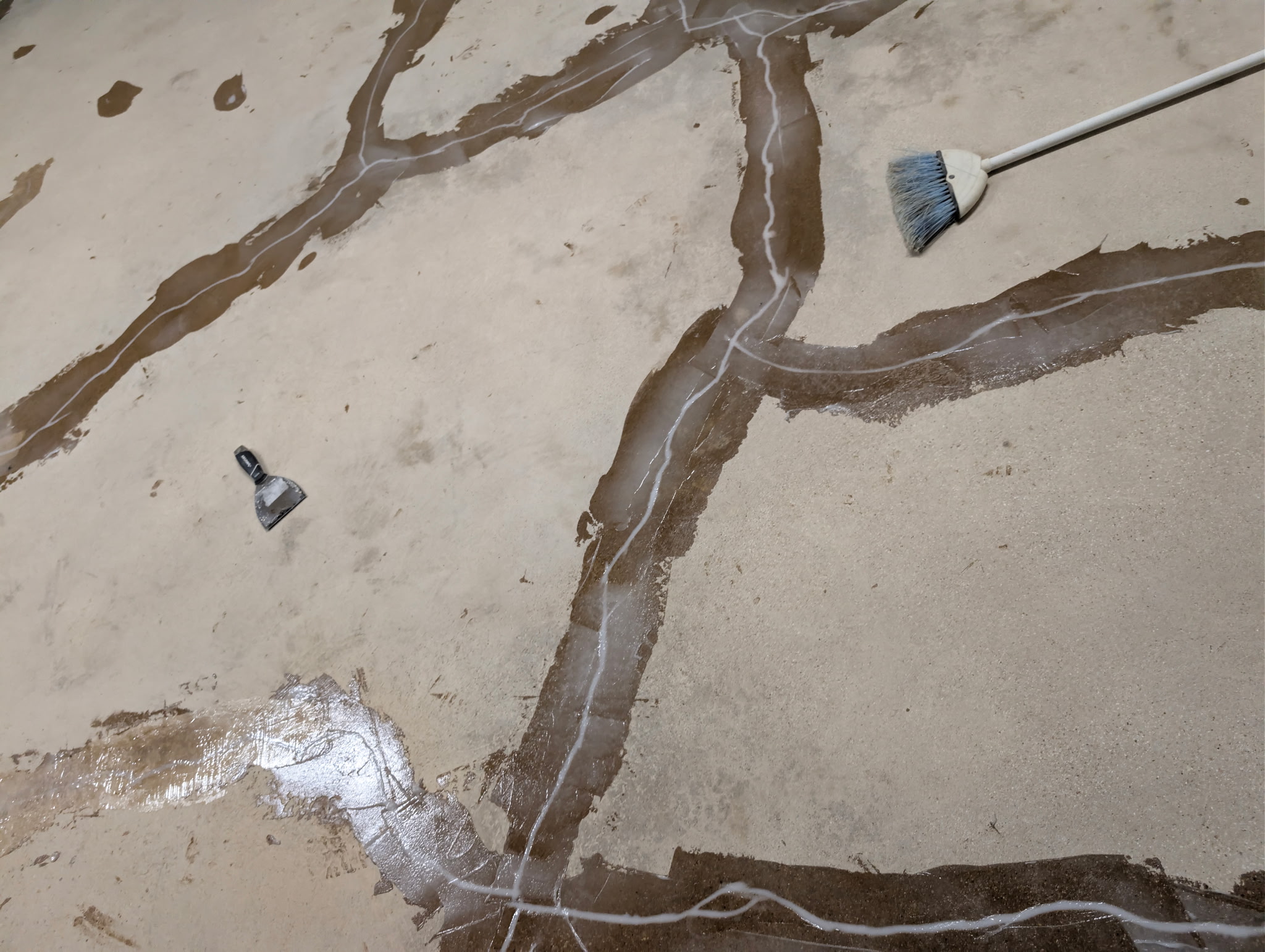
Highland Park slabs sit on Houston Black clay. It swells when it rains and shrinks through a dry summer, and the slab riding on top of it cracks and shifts as a result. On a flake floor, a repaired crack disappears under the chips. Quartz is less forgiving. The broadcast lays down an even field of fine grains, and any change in the surface underneath, whether a ridge of repair material, a low spot or a crack that kept moving, telegraphs straight up through the color.
So the cracks get chased before a single grain of quartz leaves the bag. We open them mechanically, fill them with structural repair material and grind each repair flush with the slab around it. Where a crack is still active, a crack-isolation membrane goes in under the build so the floor can flex with normal slab movement instead of splitting along the old line. Control joints stay joints. Moisture gets tested on every older slab, because concrete pushing ground moisture upward will lift any coating from below no matter how well the top was ground.
You will never see that repair once the quartz is down. It is the reason the floor stays flat and tight for years.
Picking a Blend Under Your Own Lights
Quartz comes in blends: two, three or four colors of sand mixed together, from quiet grays and tans to mixes with a few darker grains running through them. A blend that looks warm in a brochure can go cold under the LED fixtures in a back hall or turn muddy in the shade of a covered porch. So Cody brings sample boards on the walk and sets them down where the floor will be. Look at them in morning light through the back door, under the garage lights at night, wet and dry. Pick the board that still looks right in all of them.
Heat goes into the decision too. South-facing Highland Park garages can hit 130°F in August, and ordinary epoxy softens at that temperature and picks up under hot tires. We spec a hot-tire-resistant system and finish it with a UV-stable topcoat by default, so the blend you chose keeps its color in a garage that bakes all afternoon. On a porch slab that takes direct sun, that topcoat matters even more.
Show us the room that takes the beating.
Garage, back hall or porch, tell us how it gets used and when it gets wet. Cody walks it, sets the sample boards down, and the price comes back fixed and in writing.
What the Walkthrough Covers
On the walk, Cody checks what is already on the concrete, where moisture might come up, how wide the cracks run and how the joints sit, then talks blends and texture with you. The price comes back line by line and fixed, with no “starting at” fine print, and a written workmanship warranty backs the install. Every quartz floor goes down over XPS-certified prep.
Most quotes are in your hands within 48 hours of the call, and most installs schedule within two to three weeks. When a Highland Park job lines up with a trip we already have on the calendar, it can sometimes go the same week. You can look at finished floors in our project gallery, and our quartz epoxy service page covers the system in broader terms.
Quartz Floor Questions from Highland Park
Is a quartz floor rough on bare feet?
It has texture, and how much is your call. The grout coat sets the feel: a heavier grout coat leaves a softer, orange-peel surface that is comfortable barefoot, and a lighter one leaves more grip for a garage or a porch that stays wet. We show you both on sample boards before you decide.
Why do you chase cracks before the quartz goes down?
Because a quartz broadcast shows whatever is under it. Highland Park slabs ride on Houston Black clay, which swells and shrinks with the seasons, so cracks are common here. We open them, fill them with structural repair material and grind them flush, then add a crack-isolation membrane where a crack is still moving.
Will quartz hold up in a south-facing garage?
Yes, with the right spec. Garages that face south here can run to 130°F in August, enough to soften standard epoxy and let it lift under hot tires. Our default is a hot-tire-resistant system under a UV-stable topcoat, so the floor keeps its color and stays put where you park.
Should I pick quartz or flake for a back-entry room?
If people come in wet and the room takes hard daily use, quartz is the grippier, harder-wearing floor. If you would rather have something smoother underfoot that mops clean in one pass and hides small slab blemishes, flake is the easier choice. We will tell you which one suits the room.
Can a covered porch slab take a quartz floor?
Often, yes. A covered porch slab gets checked the same way a garage does: moisture readings, crack chasing and a look at how water runs off it. If the slab passes, quartz under a UV-stable topcoat gives you a textured surface that stays grippy when rain blows in under the roof.
How long before I see a firm price?
Most quotes come back within 48 hours of the call, after a walk that usually takes twenty to thirty minutes. The price is fixed and itemized line by line, so it does not move once we start unless you change the scope. A written workmanship warranty backs the install.
More Highland Park Floors and Finishes
Want to see a broadcast floor up close first? Browse the gallery, or talk to us about the room you have in mind.
Where We Work in Highland Park
We cover all of Highland Park, the older homes between Mockingbird and Lovers Lane and the residential blocks east and west of Preston. Sherwoods works out of Dallas, a 30 to 45 minute drive depending on traffic, and Highland Park is a regular stop on our Dallas County run.