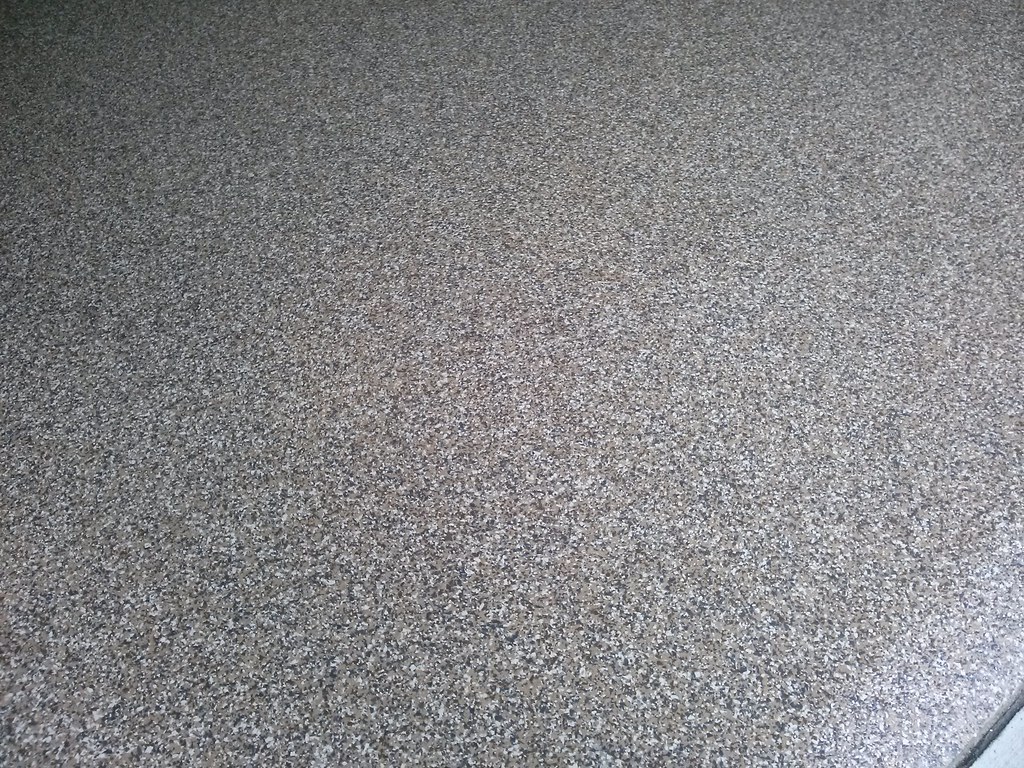
A showcase garage gets built in one order: floor first, then cabinets, slatwall, and lighting. Coating a bare, wide-open bay costs less and comes out better than working around installed cabinets. Flake handles the daily drivers and the gym bay, metallic belongs where a collector car sits, and a real polyaspartic topcoat is what keeps hot tires from lifting the finish off the slab.
Homeowners out in Stonebridge Ranch and Craig Ranch have stopped treating the garage like a place to hide things and started treating it like a room. Cabinets down one wall, slatwall for the tools, overhead LED strips, a third bay turned into a gym. Once the rest of the house is done, the garage is the last big square footage nobody has touched.
Floor First. It Is Not Close.
Here is what happens when the cabinets go in first. Now I am grinding concrete in a room full of obstacles, cutting in by hand around every cabinet base and slatwall panel instead of running the grinder straight through. The finish still comes out good, but it takes longer and the coating dies at a line of caulk under a toe kick instead of running clean wall to wall.
Coat first and the whole thing gets simpler. Empty bay, full grind, coating carried into the corners with nothing in the way, and cabinets landing on a finished, sealed surface. If you ever reconfigure that garage, the floor underneath is continuous, with no bare gray patch where the old cabinet run used to sit.
The order I want is floor, then cabinets and slatwall, then lighting last. You are walking on the coating the next day and parking on it in about three, so a cabinet installer scheduled a few days out is easy to plan around.

Pick the Finish by How the Bay Gets Used
Most showcase garages out here are three bays doing three different jobs, and they do not all want the same finish.
The daily driver bays want flake. Vinyl chips broadcast into the base coat and locked under polyaspartic hide tire scuff, dropped hardware, road grit, and spring pollen that a solid color would show. Flake also gives you real traction underfoot when somebody tracks in water off a wet driveway. Full detail on that system lives on the McKinney garage floor coatings page.
The collector bay is a different conversation. If there is a car in there that only comes out on weekends, metallic earns its place: mica pigment moves through the resin as it flows and settles into depth no two floors repeat. That is the bay people photograph. I walk through color and pour direction on the McKinney metallic epoxy page, because metallic is a design decision and it deserves a real conversation before anybody mixes anything.
The third bay, the gym or the shop, usually goes back to flake. Rubber mats, dumbbells that get dropped, a squat rack on the slab, a rolling toolbox loaded heavy. Flake under polyaspartic takes that without complaint and cleans up with a dust mop.
Hot Tire Pickup and Why the Cheap Stuff Fails
If you only remember one thing from this piece, make it this one. A tire that has been running I-75 or 121 in August comes home hot, goes slightly soft, and grips the surface under it. When it cools it contracts and pulls, and if the coating is not bonded hard, the tire wins. That is hot tire pickup, and it is the number one way garage floors fail in North Texas.
Two things cause it. The first is bad prep: a coating rolled over a slick, unground slab is sitting on top of the concrete, not locked into it. The second is the wrong topcoat: big-box kits run a thin water-based product that never develops the toughness to resist hot rubber, and it lets go the first real summer.

Golf Carts, Gym Weights, and Everything Else Rolling Through
The gym bay has its own issues, and dropped weight is the honest one. No coating on earth shrugs off a loaded bar dropped onto bare floor, so rubber goes under the platform. Everywhere else, the coating handles racks, bench feet, and dumbbells, and it buys you a sealed surface that does not dust, because bare concrete sheds fine grit forever.
Stonebridge Slabs Versus Craig Ranch Pours
The two neighborhoods hand me two different slabs, and I approach them differently.
A lot of Stonebridge Ranch homes are twenty to thirty years in now, and decades of Collin County clay have left their slabs with hairline settlement cracks and control joints that have opened up a little. Almost none of that is a dealbreaker. Stable cracks get filled and detailed until they disappear into the finish, and a joint that is still working gets treated so the coating moves with it. Older garages also hide old rolled-on sealers, which a coating will not stick to. Grinding takes them off, and skipping that step is how a floor fails in year two.
Craig Ranch and the newer sections give me cleaner, flatter concrete with far less movement history. Newer is not automatically ready, though. Builder slabs frequently carry a cure-and-seal film from the pour, newer slabs can hold more moisture, and if there is any question I test rather than guess.
Either way, I read your actual floor before I quote it. Two garages on the same street can need different work, and you should hear that up front instead of on install day. The gallery shows how these come out across McKinney slabs of both ages.
Scheduling It Without Annoying the Neighborhood
Vehicles come out of the bay and stay out for the install, so plan for the driveway. Most showcase garages are a one-day install once the slab is sound. Older Stonebridge slabs that need real crack and joint work get a half day added up front, quoted before I start so there is no surprise mid-job.
If your garage is next on the list, the honest first step is somebody looking at the slab. Send me photos or have me walk it, and we will talk through finishes bay by bay. Start at the contact page and tell me what you have.
McKinney Showcase Garage FAQ
Should I coat the floor before or after the cabinets go in?
Before, every time. An empty bay lets me grind and coat wall to wall, so the finish is continuous and the labor is cleaner. Coating around installed cabinets works, it just takes longer and ends at a caulk line.
What causes hot tire pickup, and how do you prevent it?
A hot tire softens, grips the coating, then contracts as it cools and peels it up. It happens when the slab was not ground properly so adhesion is weak, or when a thin big-box topcoat cannot resist hot rubber. Full diamond grinding plus a polyaspartic topcoat that stays hard on a hot slab is what stops it.
My Stonebridge Ranch garage has cracks and an old sealer. Is it still a candidate?
Almost certainly. Hairline settlement cracks get filled and detailed until they vanish into the finish, working joints get treated so the coating flexes instead of tearing, and the old sealer comes off with the grinder. That prep is what makes a coating last on a slab that has been through twenty-five years of Collin County clay.
Build the Garage Floor First
Planning cabinets, slatwall, and lighting in a McKinney garage? Get the floor scheduled ahead of the rest. Send photos of the slab or have Cody walk it in person.
Coat My Floor Talk to Us: (972) 369-6302