A commissioned resin piece comes down to three decisions made together before anything gets mixed: the slab of wood, the pigment direction, and the pour depth. Deep pours cure in stages, so the honest timeline is weeks, not days. Cody built tables for ten years before he ever coated a floor.
Everybody knows us for floors now, but the tables came first. Cody spent ten years building live-edge resin pieces before Sherwoods Eternal Foundation ever existed, and the shop still turns out commissions for folks around McKinney who want one piece of furniture nobody else has. Dining tables, bar tops, counters, the odd conference table for an office off 121. Same material and same instincts as the floor work, at a scale where somebody’s face is six inches from it every night at dinner.
If you have been scrolling resin tables online and wondering what it takes to get one built for your house, here is the whole thing, straight.
What a Piece Can Look Like
Most commissions land in one of a handful of directions, and they are less styles than different conversations about what the resin is supposed to do.
A river table is the one everybody pictures. Two slabs with their live edges facing each other, a channel of clear or tinted resin between them. Walnut with a wild edge gives you something dramatic. A tighter, straighter pair reads calm and modern.
An ocean pour is a different animal: layered blues and teals with a white cell structure worked in so it reads like surf breaking onto a sanded shore. It takes patience, because the foam pattern has to be coaxed while the resin is still moving, and once it sets, whatever you got is what you have.
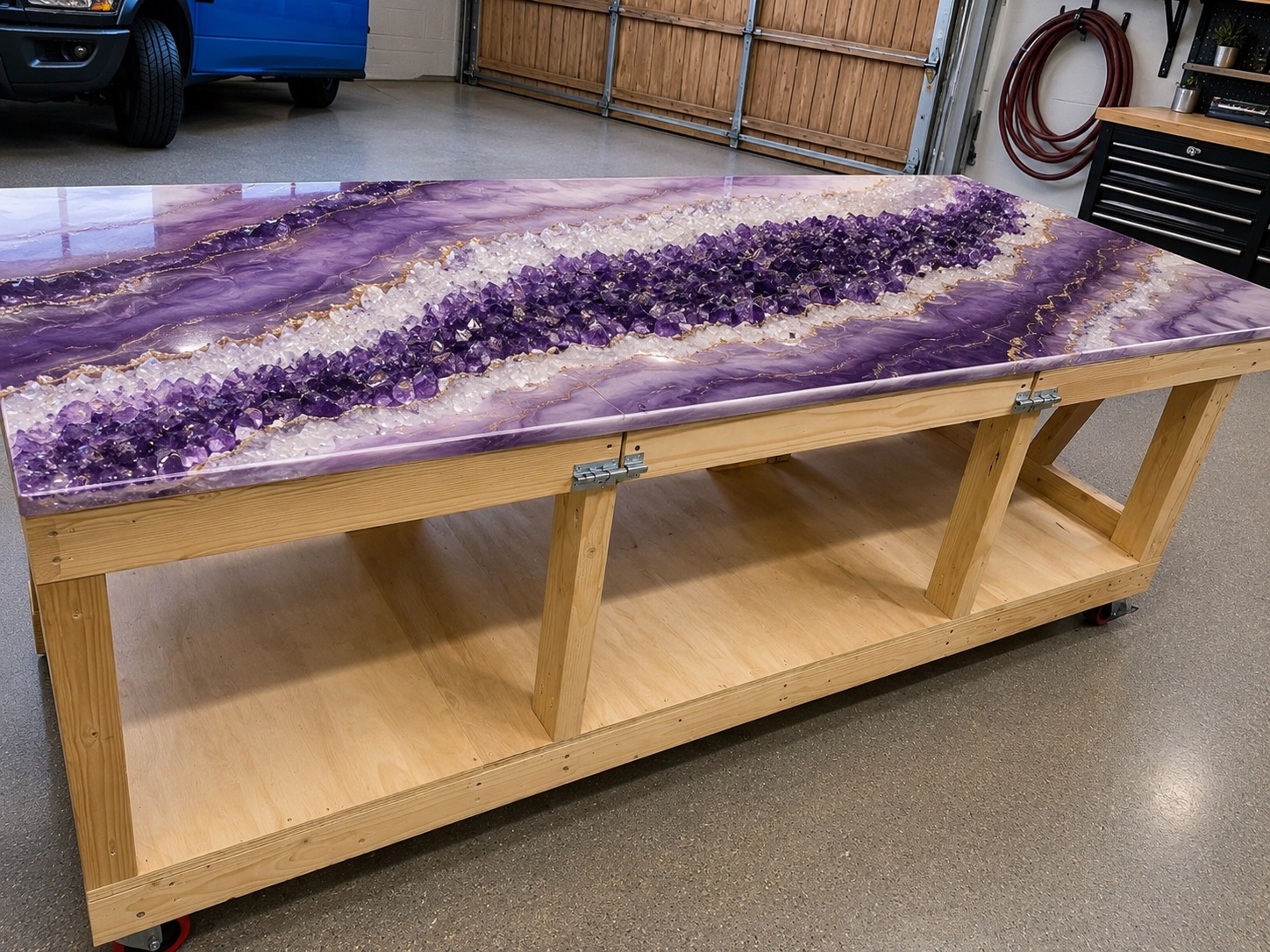
Then there are the amethyst-style pours, deep purple and violet with crystal structure built into the body of the resin so the light catches down inside it. Those photograph well but they are better in person, where the depth actually reads.

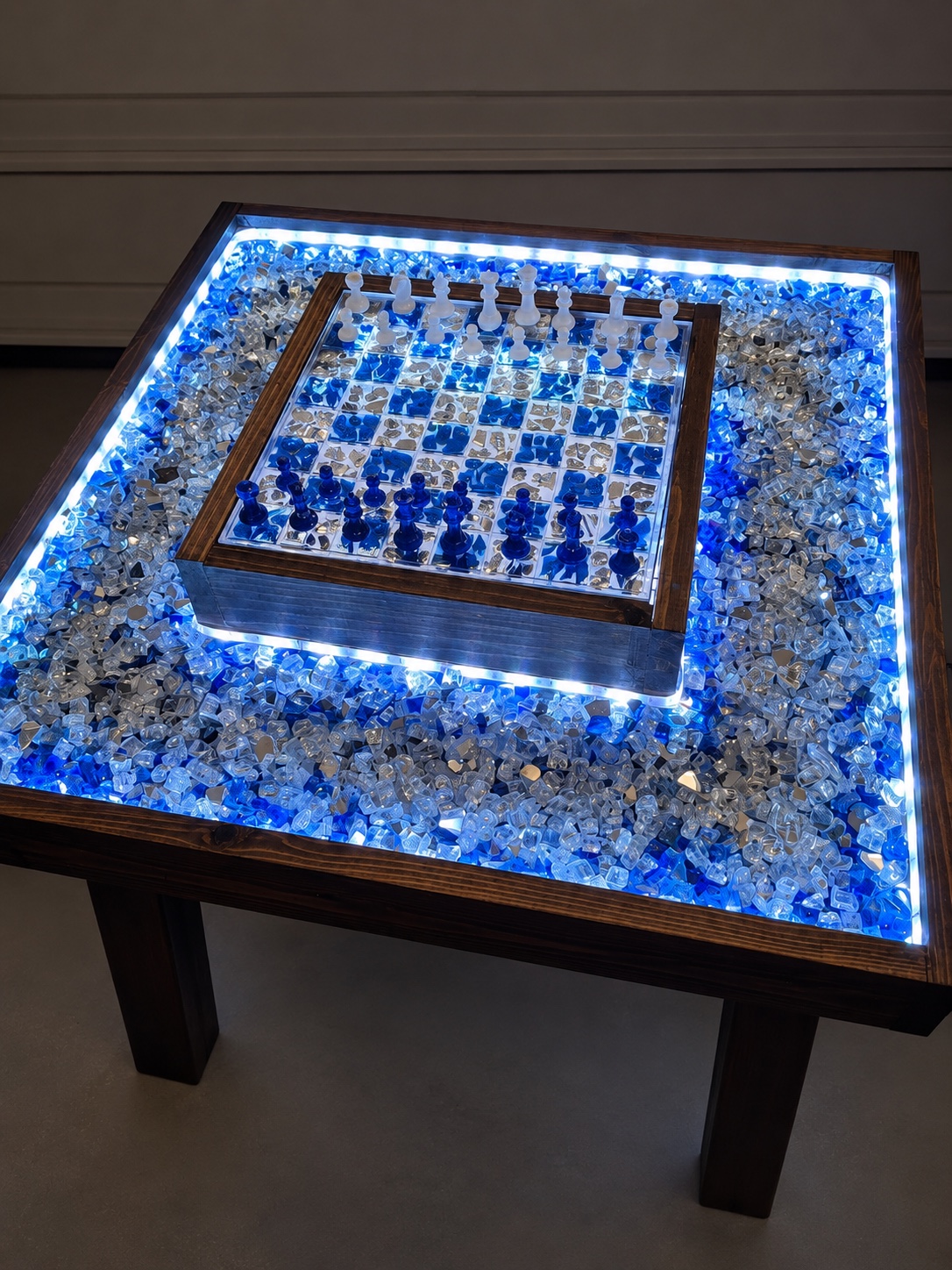
And then there is the stuff that only exists because somebody asked for it. The shop has built an LED-lit chess table, board and lighting cast right into the piece, out of a conversation, not a catalog. The idea that fits no category is usually the more interesting job anyway.
What Actually Decides How Your Piece Turns Out
Four things, roughly in order of how much they matter.
The wood. The biggest one, and the one people spend the least time on. The individual slab matters more than the species: where the grain runs, how the live edge waves, whether there is spalting in it. We pick the slab with you, because you should love the wood before we talk about color.
The pigment. Resin can go transparent, translucent, or fully opaque, which is the difference between seeing the bottom of the table and not. Metallic pigments move in the pour and leave veining. Solid pigments sit flat and modern. Most pieces use more than one, in layers.
The pour depth. This is where home projects go sideways. Standard coating resin is built for thin layers and gets hot fast in volume, so it can crack, yellow, or bubble on you. Deep-pour resin cures slowly at thickness so the heat has somewhere to go. A channel two inches deep needs deep-pour, in stages.
The finish. High gloss shows every ripple, which is fine when the pour is right. Satin reads softer and hides fingerprints better on a working kitchen surface. Bar tops and counters want a harder, more chemical-resistant topcoat than a dining table does.
The Timeline, Honestly
Here is where we would rather disappoint you up front than on the back end. A deep-pour piece is not a week of work. It is weeks, and most of that time is the resin doing its own thing while nobody touches it.
Slab selection and drying, flattening, building the form, then the first pour. A deep river goes in lifts, each curing before the next, because dumping it all at once cooks the resin. After the last lift comes the cure, flattening the top, sanding through the grits, the finish coats, and a final cure before it is safe to load up.
A dining table runs four to eight weeks depending on depth and how busy the shop is. Counters move faster because they are shallower. If somebody says they can turn a two-inch river table around in a week, they are using the wrong resin or handing you something that will crack.
Living With It
Cured resin is tough, but it is not stone and should not be treated like stone. Two rules cover almost everything.
Heat is the real enemy. Use a trivet or a pad under anything that came off a burner or out of an oven. A hot pan set straight on resin leaves a mark and there is no undoing it. Coasters under hot mugs are not a bad habit either.
Direct sun is the slower enemy. Even UV-stable resin shifts over years of hard Texas light, so if the table sits in front of a big window, a sheer through the worst of the afternoon buys you a lot. Beyond that it is soap and water, no abrasive pads, no bleach, and paste wax once or twice a year to keep the gloss new.
How a Commission Goes
It starts with what the piece is for and where it will sit. Then we talk wood, and if we can, we get you looking at actual slabs rather than photos, because people change their minds fast once they see grain in person.
From there we settle on color direction and pour depth, and put the price in writing before anything gets cut. Then we send progress photos as the lifts go in, because watching a river fill is half the fun of ordering one. Delivery and install is last.
We deliver and install directly across McKinney and Collin County. If your project is a counter, the epoxy countertops page covers the surface side of that in more detail, and the gallery has real pieces in it so you can see how the pours actually read. When you are ready to talk about what you have in mind, tell us about the piece and we will start with the slab.
Resin Commission Questions
Can you build a piece around wood I already have?
Often yes. We look at it first for moisture content, stability, and whether it was dried properly, because a slab that was not dried right will move after casting and there is no fixing that later. If your wood checks out, building around a slab that already means something to you makes a better piece anyway.
Are resin counters safe for a working kitchen?
Yes, with the right topcoat spec’d for food contact and normal care. They handle spills, wine, and daily use fine. What they do not handle is a pan straight off the burner, so trivets are not optional. We talk through the topcoat choice before the pour so it matches how hard you actually use the kitchen.
Do you do lighting or inlays inside the resin?
We have. The LED chess table is the clearest example, with the lighting cast into the piece rather than added underneath. Inlays, cast objects, and embedded lighting all have to be planned before the first lift goes in, so bring the idea up early in the conversation.
Something Nobody Else Has
Ten years of live-edge resin work behind every commission. Tell us the room, the size, and the idea, and we will start with the slab.
Talk to Us About a Commission (972) 369-6302