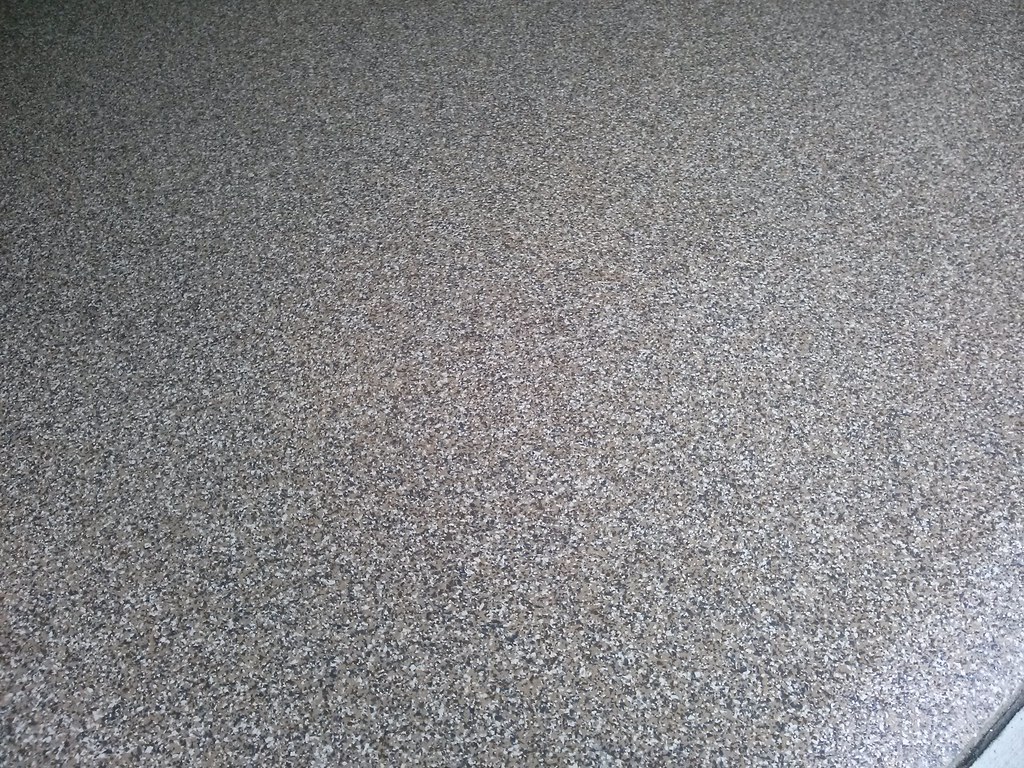
Polyaspartic is the right topcoat for a Fort Worth floor, but only if it is poured at the right slab temperature. A dark Fort Worth slab in July can hold serious heat into the evening, and polyaspartic that hits an overheated slab flashes off too fast and bonds poorly. Cody schedules the pour around the hot-slab window, often starting early, so the topcoat sets in the range it needs and actually holds.
Polyaspartic gets talked about like a magic topcoat, and in a lot of ways it earns that reputation. It is UV-stable where standard epoxy yellows, it tolerates high temperatures where epoxy softens, and it cures fast where epoxy makes you wait days. For a Fort Worth floor baking under a North Texas summer, those properties are exactly what you want, which is why it goes over every system I install. But there is a piece of the story that most homeowners never hear, and it is the piece that actually decides whether the floor lasts: the temperature of the slab at the moment the polyaspartic goes down.
Coating chemistry does not care much about the number on the thermostat. It cares about the temperature of the concrete itself. And in Fort Worth, those two numbers can be a long way apart. A dark garage slab that has been soaking up July sun through an open door, or a slab in a west-facing space with afternoon exposure, can stay hot long after the air has started to cool. That stored heat is the variable a fast crew ignores and a careful installer plans around.
What Happens When Polyaspartic Hits a Slab That Is Too Hot
Polyaspartic cures fast by design, and heat accelerates that cure. On a slab that is too hot, the topcoat kicks off faster than it should. It starts setting before it has fully wetted out and bonded to the layer beneath it, and before the installer can properly work it across the surface. The result can be poor adhesion, an uneven finish, bubbles or pinholes as trapped air cannot escape a rapidly gelling coat, and in the worst cases a topcoat that never truly locks to the base. On a hot Fort Worth slab, a polyaspartic pour that ignores temperature is a pour that is fighting the clock the whole way.
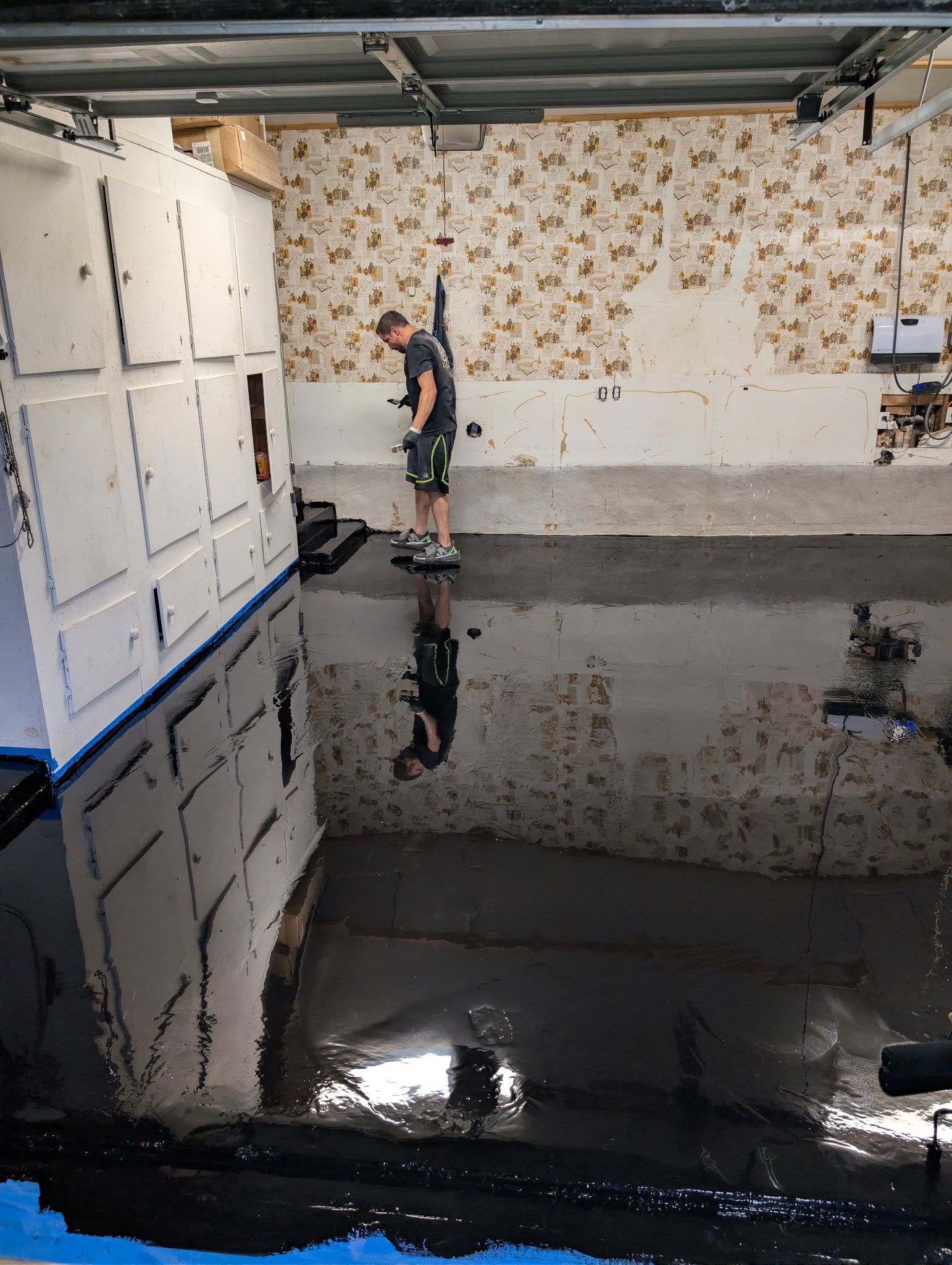
None of this is the polyaspartic’s fault. It is a material behaving exactly as its chemistry dictates. The failure is in the timing, and timing is a decision the installer makes. Which is why the same product, on the same slab, can produce a floor that lasts a decade or a floor that fails in a season, depending entirely on whether the person pouring it respected the slab temperature.
How We Schedule Around the Hot-Slab Window
The fix is not complicated, but it does require caring enough to do it. On hot Fort Worth days I schedule the polyaspartic pour for the part of the day when the slab is in the right thermal range, which in summer often means starting early before the slab has heated up, rather than pushing product onto concrete that has been cooking all afternoon. I check the slab temperature, not just the forecast, and I hold off if the numbers are wrong. Some weeks that slows the job down a bit. Every week it means the topcoat bonds the way it is supposed to.
This is the same discipline that runs through everything we do. Cody spent ten years working resin at the table scale, where a cure that goes wrong ruins a piece you cannot fix, so patience with timing is second nature. Floor-scale polyaspartic is the same instinct applied to a bigger surface: read the conditions, wait for the right window, and pour when the material and the slab agree, not when the schedule would prefer.
Reading the Slab, Not the Forecast
The mistake behind most heat-related polyaspartic failures is trusting the wrong number. A crew that checks the day’s high temperature on a phone and pours accordingly is measuring the air, when the thing that actually governs the cure is the temperature of the concrete. Those two can be far apart in Fort Worth. A dark garage slab with an open door catching morning sun, a west-facing space that has been baking all afternoon, a slab near a roll-up door that traps radiant heat: any of these can sit well above the air temperature and stay there long after the outside has started to cool. The forecast never tells you that. Only the slab does.
So I carry a surface thermometer and I use it. I take the slab temperature where the pour will actually happen, not an average of the room, because a single hot zone near a sun-facing wall can flash the coating there while the rest of the floor is fine. If the numbers are out of range, I wait or I reschedule. That sounds obvious written down, but it is exactly the step a one-day, get-it-done crew skips to hit a schedule, and it is exactly the step that decides whether the topcoat bonds. The tool costs almost nothing. Caring enough to actually read it before pouring is the whole difference.
Where Hot-Slab Timing Matters Most in Fort Worth
Some Fort Worth spaces are more prone to the hot-slab trap than others, and knowing which ones lets us plan around them. Garages with the door left open through a summer morning heat up fast and unevenly. West-facing rooms take a hard afternoon load of sun and hold it. Semi-outdoor concrete such as covered patios and pool decks lives in direct exposure and can be scorching to the touch by midday. Metal buildings and shops radiate heat down onto the slab from above. For any of these, the answer is not to avoid polyaspartic, because its UV and heat stability are exactly what those spaces need long term. The answer is to time the pour to when that specific slab is in range, which often means an early start before the sun has loaded the concrete, or splitting a large or mixed-exposure floor so each zone gets poured in its own good window.
This is also why I will not simply promise a hard install date months out and hold to it no matter the conditions. The right day to pour a polyaspartic floor in a Fort Worth July is the day, and the hour, when the slab cooperates. Building a little flexibility into the schedule so the pour lands in the right thermal window is not me being difficult; it is the single practice that separates a topcoat that holds for a decade from one that fails in a season. A client who understands that up front gets a floor that actually lasts, which is the entire point of choosing polyaspartic in the first place.
Why It Still Cures Fast Enough to Matter
Here is the good news for anyone worried that careful timing means a slow project. Even scheduled around the hot-slab window, polyaspartic still cures dramatically faster than epoxy. You are usually back on the floor with light foot traffic within a few hours, and back to full use within a day or two, depending on the conditions during the pour. For a homeowner who wants the garage back quickly, or a commercial space that cannot stay closed, that speed is real. Respecting the slab temperature does not cost you the fast return. It is simply what makes the fast return actually hold.
It is worth being clear about what polyaspartic is in all of this, because the timing conversation can make it sound fragile, and it is not. Polyaspartic is a genuinely superior topcoat for Fort Worth: UV-stable where standard epoxy yellows in the sun, temperature-tolerant where epoxy softens and grabs hot tires, and fast-curing where epoxy makes you wait days. Those are real advantages that hold up year after year on a North Texas slab, which is exactly why it goes over every system I install. The hot-slab timing is not a weakness in the product; it is simply the one condition the product needs to perform, the same way any good material has a right way to be used. Respect the slab temperature and polyaspartic does everything it promises. Ignore it and even the best topcoat cannot save a pour that was fighting the clock.
If you want a Fort Worth floor topped with polyaspartic that is poured with the slab temperature actually accounted for, that starts with an on-site look. The Fort Worth polyaspartic coatings page covers the system, and the gallery shows finished floors.
Fort Worth Polyaspartic FAQ
Why does slab temperature matter more than air temperature?
Coating chemistry reacts to the temperature of the concrete it touches, not the air above it. In Fort Worth a dark slab can hold heat long after the air cools, so the slab is often much hotter than the thermostat suggests. We check the slab temperature itself and pour within its correct window, which is what actually governs how the polyaspartic cures.
What goes wrong if polyaspartic is poured on an overheated Fort Worth slab?
Heat accelerates the cure, so the topcoat sets before it has fully wetted out and bonded. That can cause poor adhesion, an uneven finish, and bubbles or pinholes from trapped air. On a too-hot slab the pour is racing the clock, and the floor can fail early. The fix is timing, not a different product.
Does timing the pour around heat make the project slow?
No. Even scheduled around the hot-slab window, polyaspartic still cures far faster than epoxy. You are typically back to light foot traffic within a few hours and full use within a day or two. Respecting slab temperature does not cost you the fast return; it is what makes the fast return hold.
Is polyaspartic really better than epoxy for Fort Worth?
For a hot North Texas slab, yes. Polyaspartic is UV-stable where epoxy yellows, tolerates high temperatures where epoxy softens, and cures faster. It is our default topcoat over every system for exactly those reasons, as long as it is poured within the right slab-temperature window.
Fort Worth Polyaspartic Coatings
Every pour is timed to the slab temperature, not the calendar, so the topcoat bonds through a Fort Worth summer. Send photos or book an on-site look.
Get a Look at Options (972) 369-6302Fort Worth, TX services · More posts · Get a look at options