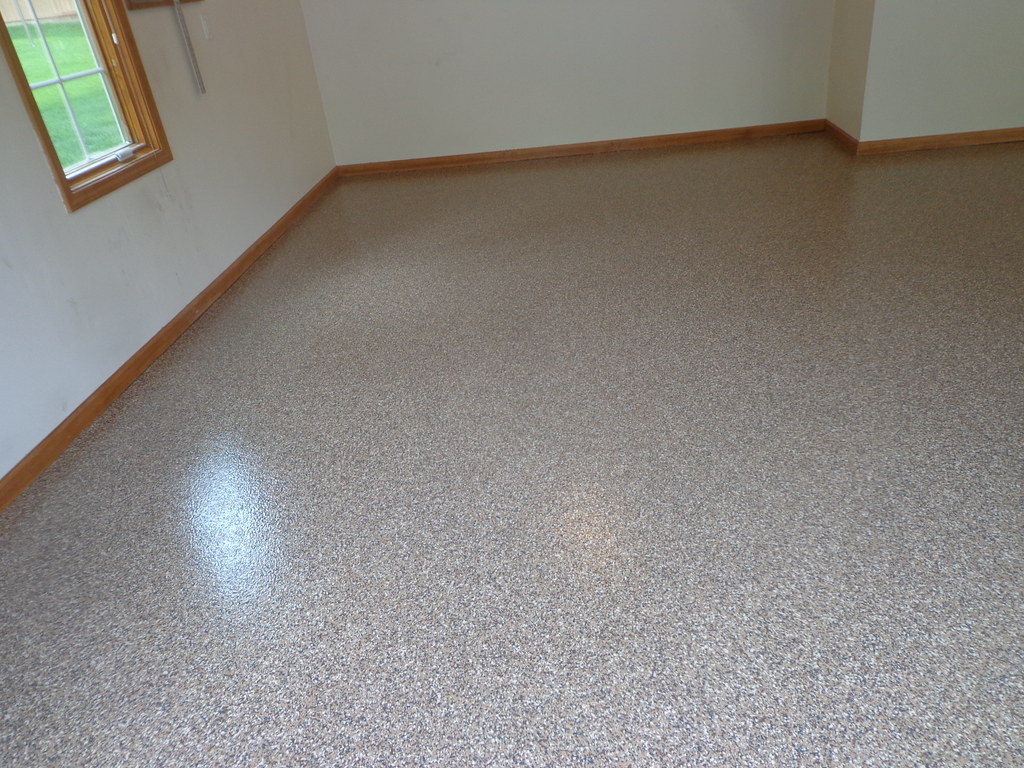
Fort Worth garages sit on expansive North Texas clay that swells when it rains and shrinks in a dry August, and that ground movement stresses the slab above it. A rushed garage coating installed over an unaddressed moving crack telegraphs the crack straight through and peels early. A coating prepped correctly, with the slab ground, cracks detailed, and joints honored, rides the movement and lasts. The prep is the whole difference.
Every Fort Worth garage floor problem I get called to look at traces back to the same root cause, and it is almost never the coating product itself. It is the ground. Tarrant County sits on some of the most expansive clay soil in the country, the kind that behaves less like dirt and more like a slow sponge. When the rain comes, the clay drinks it up and swells, pushing up against the slab your garage sits on. When we hit a dry stretch, the clay pulls back and shrinks away, and the slab settles into the void. That cycle repeats every season, and the concrete above it has no choice but to move along with it.
Most homeowners never think about this until a crack appears in the garage floor, and even then they assume it is a cosmetic annoyance rather than a signal about what the ground is doing. It is a signal. A control joint that has opened, a hairline that has grown, a corner that has lifted slightly against the door track, all of these are the slab telling you it is under stress from the clay below. If you coat over that story without reading it first, the coating inherits every bit of that movement, and coatings do not stretch the way you might hope.
Why a Rushed Coating Fails on Fort Worth Clay
Here is what happens when a one-day crew shows up, gives the slab a quick acid wash, and rolls a coating over the top by lunchtime. The acid etch does almost nothing to open the concrete pores, so the coating clings to the surface instead of bonding into it mechanically. Then the clay does what clay does. It moves. The slab flexes at the joints and cracks, and because the coating is only surface-adhered and has no give, it delaminates right along those stress lines. Within a year or two you are looking at peeling edges, lifting flakes, and a floor that looks worse than the bare concrete you started with.
The cruel part is that the coating usually looks perfect the day the crew drives away. The failure is baked in from the prep, but it takes a couple of seasons of Fort Worth wet-then-dry cycling to surface. By the time the homeowner notices, the fast crew is long gone and the deposit is spent. I have ground off more than one of these failed one-day jobs, and the pattern is always the same underneath: no real profile on the concrete, no crack detailing, and a coating that peels up in sheets because it never truly bonded.
Reading the Slab Before Anything Goes Down
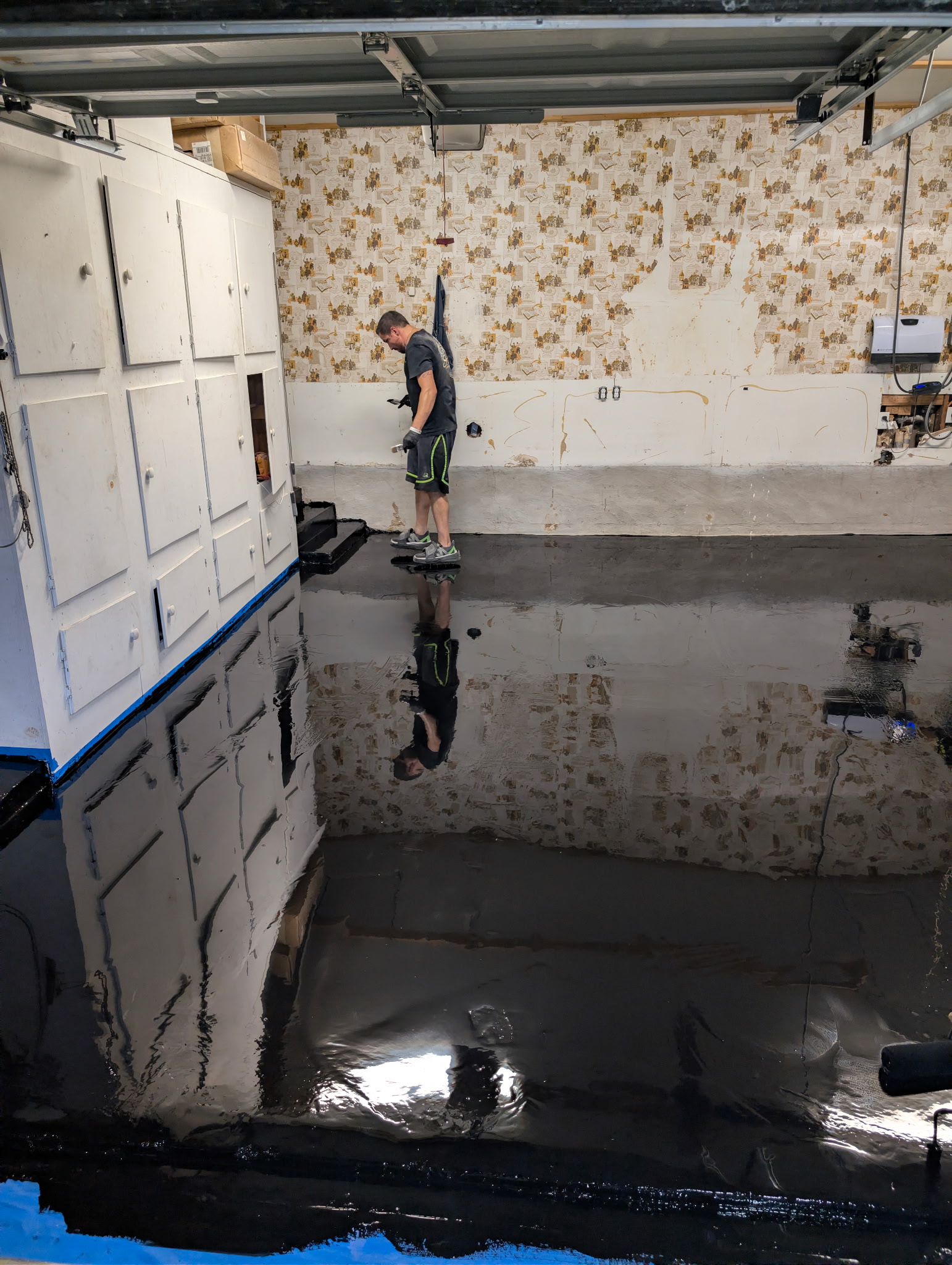
The first thing I do on any Fort Worth garage is walk the slab and read it. Where are the control joints, and have any of them opened up? Are there active cracks, and are they moving or stable? Is a corner lifting? Is there any sign of moisture pushing up from the clay below? None of this shows up in a phone photo, which is one reason I insist on being there in person before I commit to anything. The slab has a story, and the coating plan has to be written around that story rather than in spite of it.
Control joints exist for a reason. They are deliberate weak lines the concrete crew cut into the slab so that when the ground moves, the concrete cracks along a planned line instead of a random one. A good coating honors those joints. We do not smear coating across a moving control joint and pretend it will hold, because it will not. We detail the joint so the coating can move with it. Active cracks get filled and treated so they flex rather than telegraph. And if a slab is moving so badly that it needs structural attention before any coating makes sense, I say so up front, even though it is not the answer anyone wants to hear.
Diamond Grinding Is Not Optional Here
The single biggest thing that separates a Fort Worth garage floor that lasts a decade from one that peels in a season is the grind. I diamond-grind every slab. No acid etch, no shortcut to save an hour. Grinding physically opens the pores of the concrete and creates a profile the primer can key into, so the bond is mechanical, not just chemical. On expansive clay, where the slab is going to move under the coating no matter what, that deep mechanical bond is what lets the system flex and stay attached instead of shearing off at the surface.
Once the slab is ground and the cracks and joints are detailed, the rest of the system builds on that foundation: a full-solids epoxy base coat, a broadcast of vinyl flake if that is the look you want, and a polyaspartic topcoat that handles the Fort Worth heat and adds slip resistance. Every layer matters, but they all sit on the prep. Skip the prep on Tarrant County clay and it does not matter how good the products are. Get the prep right and even an aggressive clay slab gets a floor that holds.
What This Means for Your Fort Worth Garage
If you are getting quotes for a garage floor and one crew promises they will be in and out in a morning while another wants to see the slab first and talk about your cracks, that difference tells you everything. The garage floor is not the place to buy the fastest option. It is the place to buy the one that accounts for the ground it sits on. Cody built live-edge resin tables for ten years before he ever coated a floor, and that craftsman patience is exactly what expansive Fort Worth clay demands. The floor is only as good as the prep underneath it, and the prep is only as good as the read on the slab.
When you are ready, the honest path is a real on-site look. We will read your slab, show you what the clay has been doing to it, and tell you straight what it takes to build a floor that rides the movement for years. If you want to see how a properly prepped garage comes out, the Fort Worth garage floor coatings page walks through the full system, and the gallery shows real finishes.
Fort Worth Garage Epoxy FAQ
Will clay slab movement crack my new garage coating?
Not if the slab is prepped and detailed correctly first. We read the control joints and active cracks, honor and fill them so the coating moves with the concrete rather than fighting it, and flag any slab that needs structural work before coating. The coating inherits whatever the prep ignored, so the prep is where the durability lives.
Why does diamond grinding matter so much in Fort Worth?
Grinding opens the concrete pores and creates a profile the primer bonds into mechanically. On expansive Tarrant County clay the slab is going to move under the coating regardless, and that deep mechanical bond is what lets the system flex and stay attached instead of shearing off. Acid etch does not create that bond, which is why etched jobs peel.
My garage already has a crack. Can it still be coated?
Usually yes. An existing crack is not automatically a dealbreaker; it is information. We evaluate whether it is stable or actively moving, fill and treat it so it flexes, and detail it into the system. A slab with severe ongoing movement may need structural attention first, and we will tell you honestly if that is the case.
How long should a properly prepped Fort Worth garage floor last?
A floor built on diamond-grind prep, honest crack detailing, a full-solids base, and a polyaspartic topcoat holds up for well over a decade through Fort Worth heat cycling and clay movement. A rushed, acid-etched job on the same slab often fails within a year or two, which is the difference the prep makes.
Fort Worth Garage Floor Coatings
Cody reads your slab before he ever mixes a product, because on Fort Worth clay the prep is the whole job. Send photos or book an on-site look.
Coat My Floor (972) 369-6302