Quartz is the floor we suggest most often for the room by the back door: the mudroom, the step in from the garage, a covered porch slab. Two broadcasts of colored quartz sand give it a grip you can feel through a wet sneaker. The catch is that quartz shows every repair underneath it, so the slab has to be fixed and ground before any sand goes down.
Most older houses have one room where the whole day comes in. In a lot of Highland Park homes it is the back entry off the drive: wet shoes, a dog coming in from the yard, sports bags dropped on the floor, a cooler dragged across on the way to the car. Those rooms often sit on original concrete under tired tile or old paint, and they wear out faster than anything else in the house. Quartz handles that kind of traffic well. This post covers how the system is built, where it fits and where it does not, and the one step people underrate.
What the room by the back door asks for
A back entry gets water, grit and weight in the same afternoon. Sand from the yard grinds under shoes. Rain and pool water come in on bare feet. Somebody sets down a toolbox or a bag of potting soil. A smooth glossy coating can look great on day one and get slick and scuffed by the end of the first spring.
What that room wants is a surface with real texture, a finish that hides a bit of dirt between mops, and a build thick enough that a dropped hammer does not reach the concrete. Quartz gives you all three, which is why we steer people toward it for mudrooms, back halls, the landing inside the garage door and covered porch slabs that stay out of direct rain.
It is less suited to a room you want to look like a showroom. If the goal is a deep, mirror-glossy floor in a basement bar, quartz is the wrong tool and we will say so. Our quartz epoxy page for Highland Park walks through the rooms where we install it most.
Two broadcasts, then a grout coat
A quartz floor is built in layers, and the texture comes from how the sand goes in. After the slab is ground and repaired, we roll on a base coat and throw colored quartz sand into it while it is wet, until the coat will not take any more. That is called broadcasting to refusal. Once it cures, we sweep and vacuum off the loose sand.
Then we do it again: a second coat, a second full broadcast, another cleanup. Two passes build a thicker, more even layer of sand locked in resin than one pass can, and that thickness is what makes the floor shrug off a dragged cooler.
The grout coat comes next. It fills the gaps between the grains and decides how coarse the floor feels underfoot. A heavier grout coat gives a smoother feel that is easier to mop. A lighter one leaves more bite for wet feet. We set that by the room, then finish with a topcoat. For a garage landing that faces south, that topcoat is UV-stable and rated for hot tires, because those garages reach 130°F in August.
Quartz shows every patch, so cracks come first
Highland Park slabs sit on Houston Black clay, which swells when it is wet and shrinks when it dries out. Over the decades that movement opens cracks, and older back entries usually carry a few. A flake floor can disguise a filled crack under the chips. Quartz cannot. The grains settle into whatever is beneath them, and a lumpy patch or a sunken filler line reads right through the finished floor.
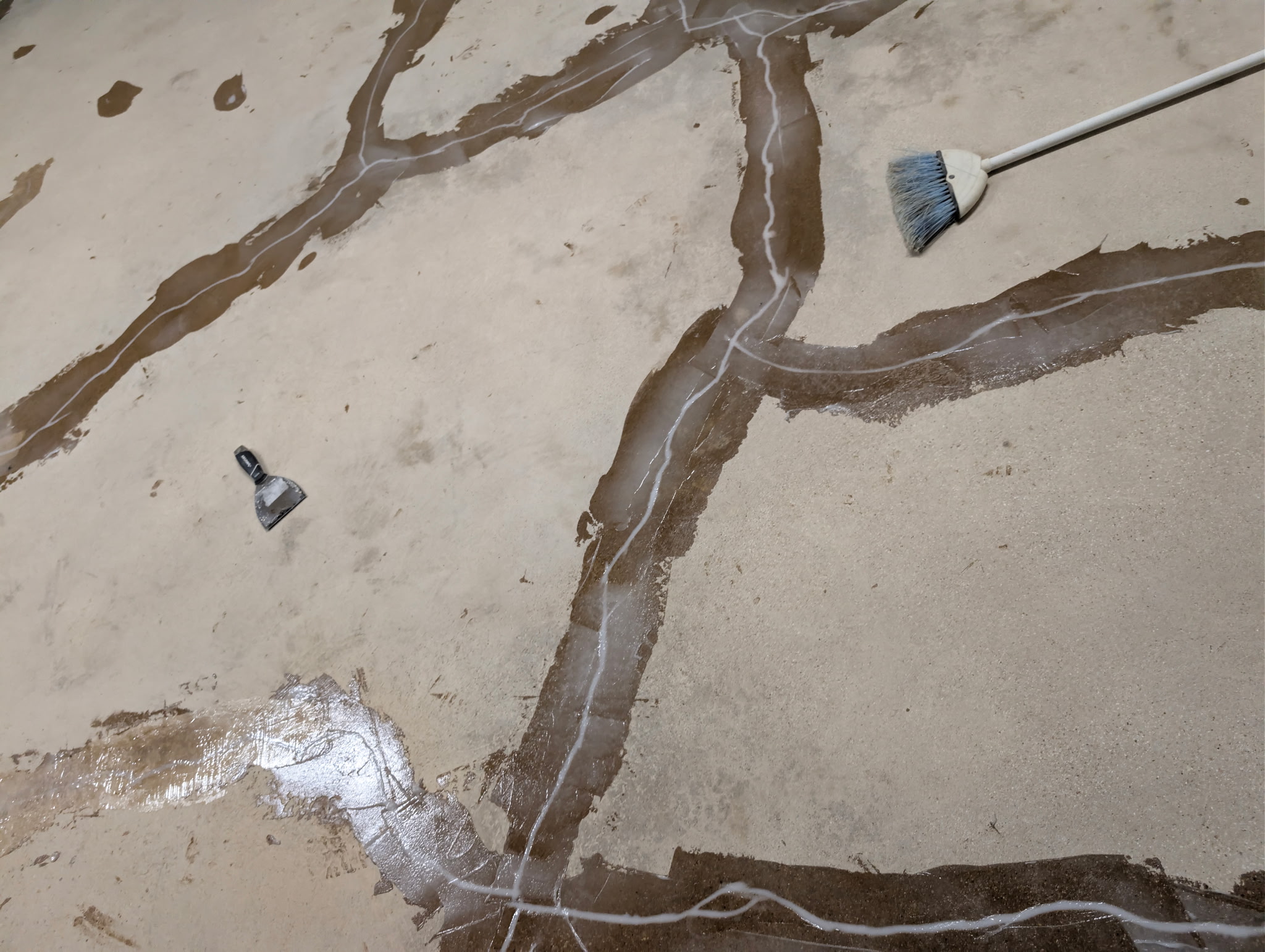
So the cracks get chased open mechanically, filled with a real repair material, and ground flush with the slab around them. Where a crack is still moving, we can install crack-isolation membrane so the floor flexes with the slab instead of splitting along the old line. Then the whole room is ground to the right profile and tested for moisture. Skipping any of that is how a quartz floor ends up with a visible scar across the doorway.
Choosing a blend in the light you actually have
Back entries tend to be dim. There might be one window, a glass storm door, and an overhead fixture that throws warm light. A quartz blend that looks crisp and bright on a phone screen can turn muddy in that room, and a dark blend can make a narrow hall feel like a closet.
That is why we bring sample boards on the walkthrough and set them on your floor, near the door, at the time of day you use the room most. Look at them wet, too, if the room sees rain or pool water. Some blends darken a lot when wet and some barely change.
Lighter blends hide dust and yard sand. Mid-tone blends with a few darker grains hide almost everything. Very dark blends look sharp and show every footprint. None of these is wrong. It depends on whether you would rather mop on Monday or not notice until Friday. Our quartz epoxy service page shows more about the system across all our service areas.
Quartz or flake for this room, plainly
Both systems hold up in a back entry, and the choice comes down to texture and look. Quartz has a tighter, sandier grip, takes more abuse before it shows wear, and gives a more uniform look. It is a little harder to sweep, and the color range is narrower.
Flake is softer underfoot, cleans up faster with a mop, and comes in far more blends, from quiet grays to busy multi-color mixes. It is also more forgiving of a floor that was not perfectly flat to begin with. Its grip comes from grit added to the topcoat instead of from the sand itself.
If the room sees wet bare feet every summer, or boots and tools every day, we lean quartz. If it is mostly a pass-through and you care more about matching the garage floor next to it, flake can make more sense. Plenty of houses get both: flake in the garage, quartz on the landing and the mudroom, laid on the same visit.
Questions about quartz at the back door
Is a quartz floor hard to keep clean?
It takes a little more effort than a smooth floor because grit can sit in the texture. A soft broom, then a mop with a mild cleaner, handles it. If cleaning matters more than grip, we lay a heavier grout coat so the surface feels smoother and wipes faster.
Can quartz go over the old tile in my mudroom?
We do not coat over tile in a back entry. Grout lines and loose tiles show through and break the bond. The tile and its setting bed come up, the concrete beneath gets ground and repaired, and the quartz goes on bare slab. We look at what is under the tile on the walkthrough.
Can the garage and the back entry be done on the same visit?
Usually, yes. Both rooms get the same grinding, crack repair and broadcast steps, so running them together keeps the schedule short. The back entry tends to be the door everyone uses, so we settle on the walkthrough which way you come and go while each floor cures.
If your back entry is the room that wears out first, call and tell us what comes through that door each day. Cody will look at the slab, bring blends to set down by the door and put the whole scope in a written quote. Finished floors are in our gallery, the contact page reaches us any time, and the Highland Park page covers the rest of our work in town.
A Floor That Grips at the Back Door
Every quartz floor starts with chased cracks, a ground slab and a moisture reading, and we do that part ourselves.
Meet Cody at Your Slab (972) 369-6302