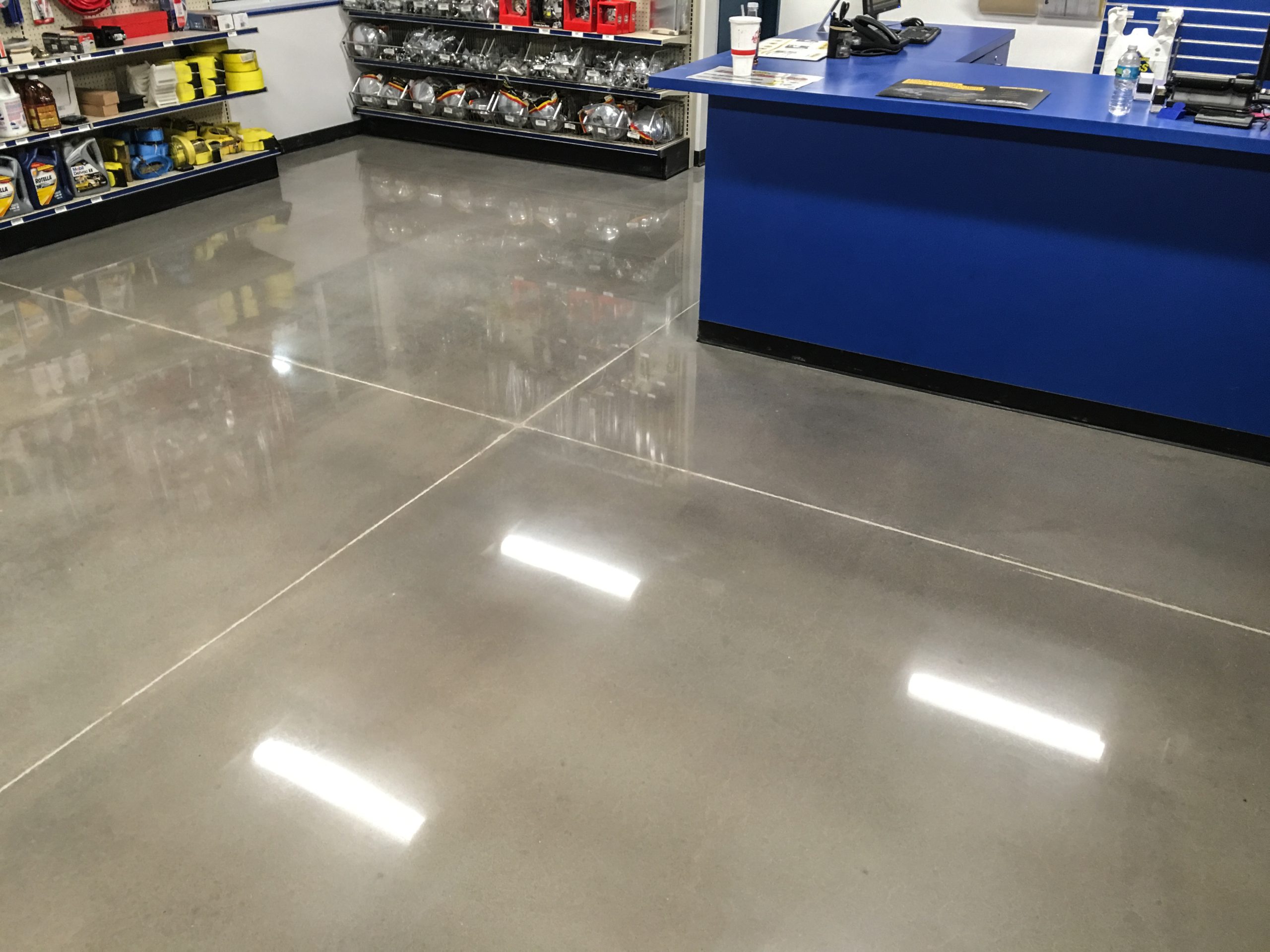
The shops and restaurants around the historic McKinney square sit on some of the oldest working floors I get called out to look at. A Louisiana Street storefront may have had six businesses in it since the concrete went down, and every one left something behind in that slab. When an owner asks me about putting an epoxy floor in a space like that, the honest answer is that the finish is the easy part. The slab decides almost everything.
So this is what I actually look for when I walk into an old downtown space, what has to happen before any coating goes on, and where the line is between a floor we can make beautiful and a floor I will talk you out of.
What Century-Old Downtown Concrete Brings With It
The first thing to understand is that there is probably no vapor barrier under that slab. Slabs from the early 1900s were poured straight onto dirt or gravel, so the floor is a wick. Ground water moves up through it constantly, and if you seal a nonbreathing coating over the top of it, that vapor collects underneath and pushes the coating off the slab. It shows up as bubbles and then as sheets peeling in the corners, usually a few months after the job looked perfect.
This is why moisture testing is not a formality on a downtown floor. We run calcium chloride or relative humidity testing and get an actual number before I will quote a system. On a new slab in a Craig Ranch office I am mostly confirming what I expect. On a hundred-year-old square building, that number is the whole conversation.
Then there is what got spilled. Old commercial concrete has soaked up decades of cooking grease, motor oil, floor wax, and mop water, and that contamination is down in the pores, not on the surface. Restaurants are the hardest cases, because grease migrates deep over forty years of service.
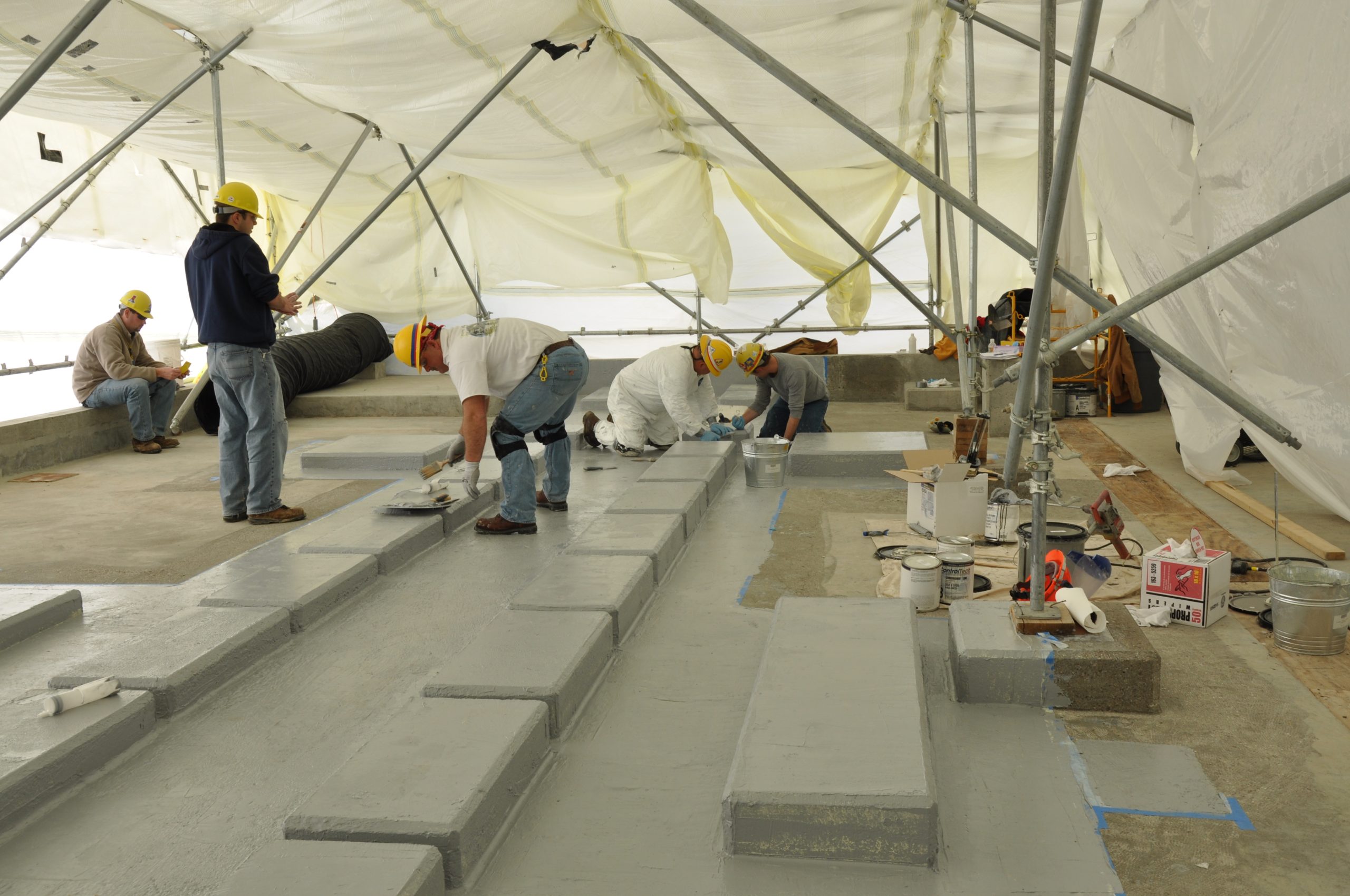
Old adhesive is the other regular find. Almost every one of these spaces has had vinyl tile or carpet glued down at some point, and the glue is still there. Some of the older black mastic contains asbestos, which means testing and proper abatement, not a grinder. That is a licensed specialty and I will tell you straight when a floor needs one before I can start.
Finally there are the trenches. Any building that has been remodeled has had its slab cut open for plumbing or electrical, then patched. Those patches take a coating differently than the slab around them, and you can see the ghost of every trench through a bad install. The floors are rarely flat either, and a century of settlement leaves dips and slopes that show up the moment you put a glossy surface on them.
The Prep That Actually Solves It
Every one of those problems has an answer, and none of the answers are fast. We start with diamond grinding, which opens the pores, takes off contaminated surface, removes old adhesive, and gives the coating a profile to bond to. On a downtown slab we grind harder and longer than on newer concrete, because we are chasing contamination, not just texture.
Where moisture numbers come back high, we install a moisture mitigating primer. It bonds to damp concrete and holds back vapor pressure so the coating above it stays put. It costs more and adds a day, and it is the difference between a floor that lasts and a floor that peels. When an owner asks whether we can skip it to save time, that is the one place I do not budge.
Patching is next. Trench repairs, spalled areas, and old anchor holes get filled with a repair mortar compatible with the coating system, and low spots can come up with a self leveling underlayment. Sometimes the smarter move is to accept the character of the floor and pick a finish that reads well over gentle waves rather than fighting for a mirror.
Picking a Finish for Retail and Food Service
For restaurants and any space with a wet zone, flake is usually the answer. A flake system with a texture additive in the topcoat gives real slip resistance where staff move fast with wet hands and full trays, and the flake pattern hides the small imperfections a downtown slab will always have. It cleans up well, it handles dropped dishes better than a smooth gloss, and it stands up to constant mopping.
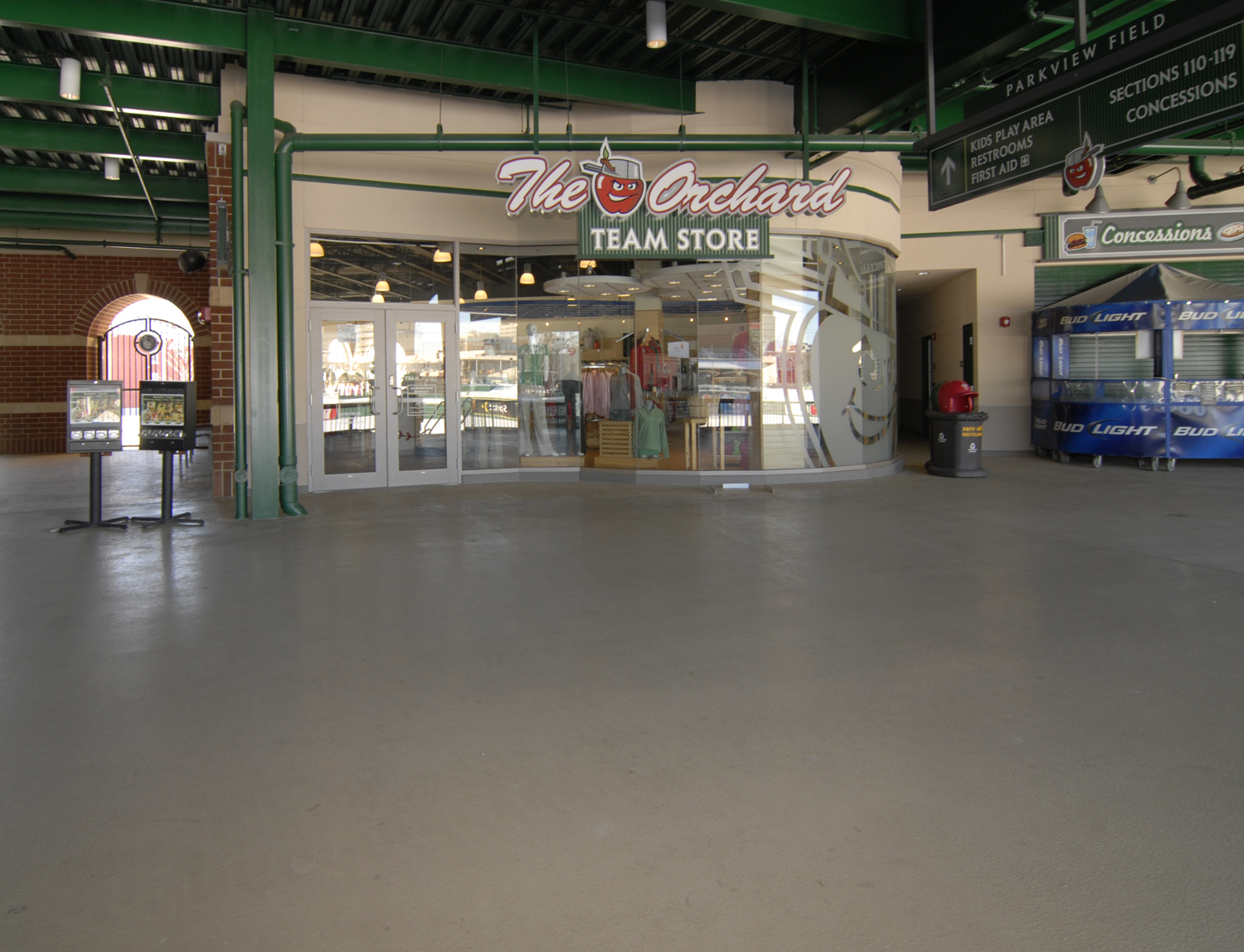
Retail is different. In a boutique or gallery on the square, a lot of owners want the concrete to look like what it is. If the slab has good aggregate and interesting patina, we can grind and clear seal it so the history of the floor stays visible under a durable finish. Solid color epoxy is the third option, for a space that needs a clean neutral surface over a slab with nothing worth showing off.
Working Around Your Hours
Most of these jobs run overnight. We come in after close, grind and vacuum, prime, and coat, then come back the following night for the topcoat so the space is walkable and open for business. A slab that needs mitigation primer needs an extra night. We map the whole schedule against your hours before we start, and if a Sunday close plus two nights is what it takes, we plan for that instead of promising you something that would require rushing a cure.
When I Tell an Owner No
There are floors I turn down. If moisture readings are extreme and a drainage problem is feeding them, a coating will fail no matter what primer we use. If a slab is structurally cracked and still moving, coating it just paints over a problem that will reappear through the finish. If grease contamination runs too deep to grind out, the bond will not hold. And if the test comes back with asbestos in the old mastic, the abatement has to happen first.
Saying that costs me work, and I would rather lose the job than hand a small business owner a floor that fails in a year. In most of those cases there is still a good option, and I will point you toward it. You can see the range of what we do on finished projects in the gallery, and the McKinney commercial epoxy page covers systems and scheduling in more detail.
Downtown McKinney Shop Floor Questions
Can epoxy go over a hundred-year-old concrete slab?
Often yes, but only after testing. Old downtown slabs were poured without a vapor barrier, so ground moisture travels up through them and can push a coating loose. We test for moisture, grind to open the concrete, and use a moisture mitigating primer when the numbers call for it. That process is what makes an old slab a candidate.
What happens to the old glue and tile adhesive under the floor?
Diamond grinding removes most adhesive residue and gives us the surface profile a coating needs. The exception is older black mastic, which can contain asbestos. That requires testing and licensed abatement before any grinding happens, and we will tell you when a floor needs it.
Can you do the work overnight so we open on time?
That is how most square shop and restaurant floors get done. We work after close, usually across two nights so the topcoat has proper cure time, and schedule around your hours. If the slab needs mitigation primer, we plan an extra night rather than rushing a cure.
Old Slab, Honest Answer
Send us your square footage and what the space is used for, and we will walk the floor, test the slab, and tell you what it can carry.
Coat My Floor (972) 369-6302