A restaurant kitchen, a sales floor and a showroom each want a different floor, even when all three share one building. Kitchens need a joint-free surface that climbs the wall and grips when wet. Retail needs a finish that hides the scuffs of a busy week. Showrooms want the floor noticed. The grinding and moisture testing underneath are the same for all of them.
Most of the commercial calls we get from Irving start the same way. The owner has a floor that is failing in one spot, usually a kitchen line or the path from the front door to the register, and the first question is whether the business has to close. The second question is what the floor should be. Those are fair questions, and the answer to the second one changes the answer to the first. A floor chosen for how the room is actually used goes down in a planned sequence and lasts. A floor chosen from a brochure tends to be redone. This post walks through how we think about the three kinds of rooms we see most, then how the old slabs around town and your open hours shape the job.
The kitchen floor has one job, and it is staying clean
Quarry tile and grout were the standard in restaurant kitchens for decades, and anyone who has scrubbed one knows the weakness. Grout lines hold grease, the tile edges chip under dropped pans, and the corner where floor meets wall collects everything the mop pushes into it. A poured resin floor removes most of those places for dirt to live. It is one continuous surface, and at the walls we carry the coating up into a curved base so there is no ninety-degree seam for water to sit in.
Grip matters as much as cleanliness. A kitchen floor is wet for most of a shift, so we broadcast a fine grit into the topcoat. You can feel it under a shoe, and it still cleans with a deck brush and hot water.
What we will not do is tell you a floor passes inspection on our word. Every product we put down has a data sheet, and we hand those over so you can confirm with your inspector before anything is poured. Our commercial epoxy work around Irving starts with that conversation about what your kitchen runs every day.
A sales floor needs a different finish than the back room
Out front, nobody is hosing the floor down, but hundreds of people cross it. Sand comes in on shoes from the parking lot, carts and hand trucks roll across it, and a display rack gets dragged three feet every time the merchandise changes. A smooth, single-color floor shows every one of those marks within a month. A flake system hides them. The broadcast chips break up the surface so a scuff or a black heel mark disappears into the pattern instead of standing alone on a plain field.
Color value is the choice people get wrong most often. Very dark floors swallow light and make a small shop feel tight. Very light floors show every spill under bright retail fixtures. A middle tone with a mix of chip colors usually wins. We finish these floors with a polyaspartic clear, which holds its color near a glass storefront where the afternoon sun lands. The flake systems we install in Irving come in blends you can hold up against your fixtures before you decide.
A showroom floor that people see from the parking lot
Some businesses want the floor to do selling work. A boutique, a salon, a furniture or lighting showroom: when the glass is clean and the lights are on, the floor is visible from the sidewalk, and it sets the tone before anyone opens the door. That is where a metallic system earns its place. The pigment moves while the resin is wet, and the finished floor has depth and drift that tile and plain concrete cannot give you.
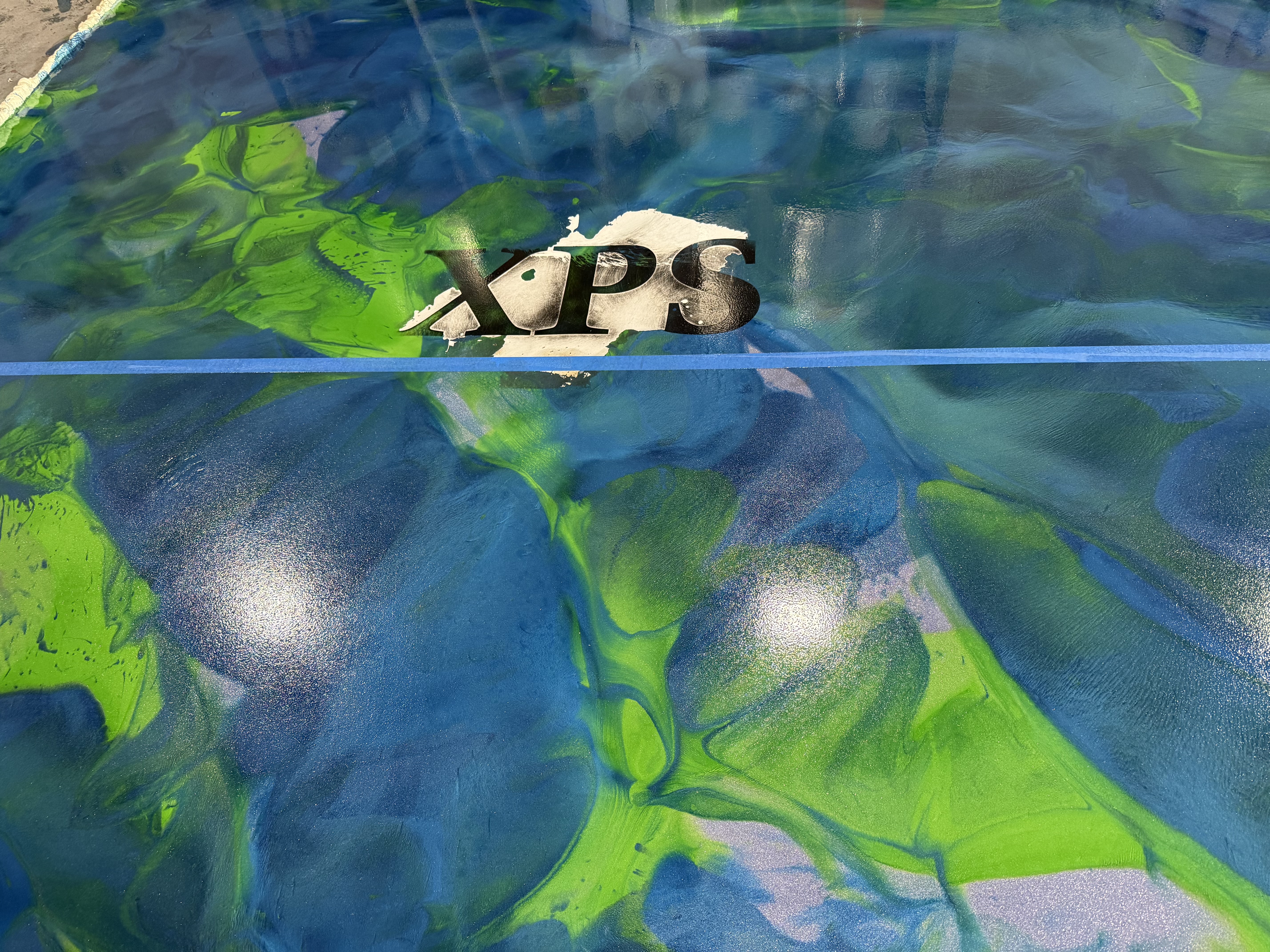
Cody came to floors from ten years of pouring live-edge resin tables, and metallic work is the closest thing on a job site to that craft. Every pour is its own, so we bring sample boards and look at them in your space under your lighting.
There is a trade to be honest about. A smooth metallic surface shows scratches more readily than flake, because a scratch interrupts the reflection. Showrooms with light foot traffic handle that easily. A shop with heavy carts is usually better served by flake. The metallic floors we pour in Irving are spec’d with that traffic question answered first.
Old strip-center slabs and what the grinder finds
Las Colinas has newer construction, but a lot of Irving’s small commercial space sits in older centers where the slab has been covered and uncovered several times. Pull up the vinyl tile and you find black mastic. Pull up the carpet and you find glue, paint from a past tenant, maybe a sealer nobody documented. None of that can stay. Resin needs open, clean concrete to hold, so the first day is diamond grinding until the slab underneath is bare and profiled.
Two more things come out of that grinding. The first is cracks. Irving slabs sit on clay that swells when it is wet and shrinks when it dries, so we chase cracks open and repair them mechanically instead of smearing filler over them. The second is joints. Saw-cut control joints are there so the slab cracks where it is told to, and we honor them in the new floor rather than bridging over and hoping. We also test moisture before anything is mixed, because a slab pushing vapor will lift a coating from below.
Planning the work around your open hours
Closing for a week is off the table for most restaurants, and it should be. What we do instead is plan the sequence before we arrive. That means deciding which areas can be taped off and done in stages, what has to happen when the doors are locked, and how long each coat needs before people can walk on it. Dust control and ventilation get planned too, since a grinder in a dining room is nobody’s idea of a good lunch rush.
Topcoat choice affects the calendar. Polyaspartic cures faster than a standard epoxy clear, which can shorten the gap between the last coat and your first customer. It also has a short working window, so it is not a product for crews learning on your floor. Our polyaspartic coatings for Irving floors are where that faster return comes from.
The schedule goes on paper as part of the fixed-price quote, with each area, each coat and the reopening time written out. If the slab surprises us during grinding, you hear about it that day, before anything changes.
What Irving owners ask before a commercial floor
Can you coat a restaurant kitchen without closing for a week?
Usually, yes. We plan the kitchen in stages around your hours, grind and coat when the line is shut down, and let each coat cure before staff walk it. The exact sequence depends on the size of the room and the topcoat, and we write that plan down before the job starts.
How do I know a coated kitchen floor will satisfy my health inspector?
We give you the data sheet for every product in the system before we pour, so you or your inspector can check them against what your kitchen needs. A continuous surface with a curved wall base and grit in the topcoat is built to be cleaned, and the paperwork lets you confirm the rest.
Will a flake floor hold up to carts and hand trucks in a busy shop?
Flake is the system we suggest for exactly that kind of traffic. The chips hide scuffs, the clear topcoat takes the abrasion, and the whole floor is only as strong as its bond, which is why we grind every slab to open concrete before any coating goes down.
If your kitchen tile is failing or your sales floor looks tired, finished floors in our project gallery will give you a feel for the options, and the contact page takes the details of your space. Cody will walk the room, test the slab and put a fixed price and a written schedule in front of you. The quickest start is a phone call to (972) 369-6302, telling us what that floor goes through on a Saturday night.
Tell Us What Your Floor Has to Survive
The visit covers moisture readings, a look at every crack and joint, and a written schedule built around your open hours.
Meet Cody at Your Slab (972) 369-6302Every coating we do in Irving · Read another post · Contact us