Carrollton Polyaspartic Coatings
Polyaspartic is the layer that decides how long a Carrollton floor keeps looking the way it did on day one. It cures in hours instead of days, it does not amber under Texas sun, and it stays hard when a slab off Josey Lane is holding August heat well into the evening. We run it as the clear over our flake systems, and we run it on its own where a sound floor just needs a fresh protective coat.
What a One-Day Floor Is Actually Buying You
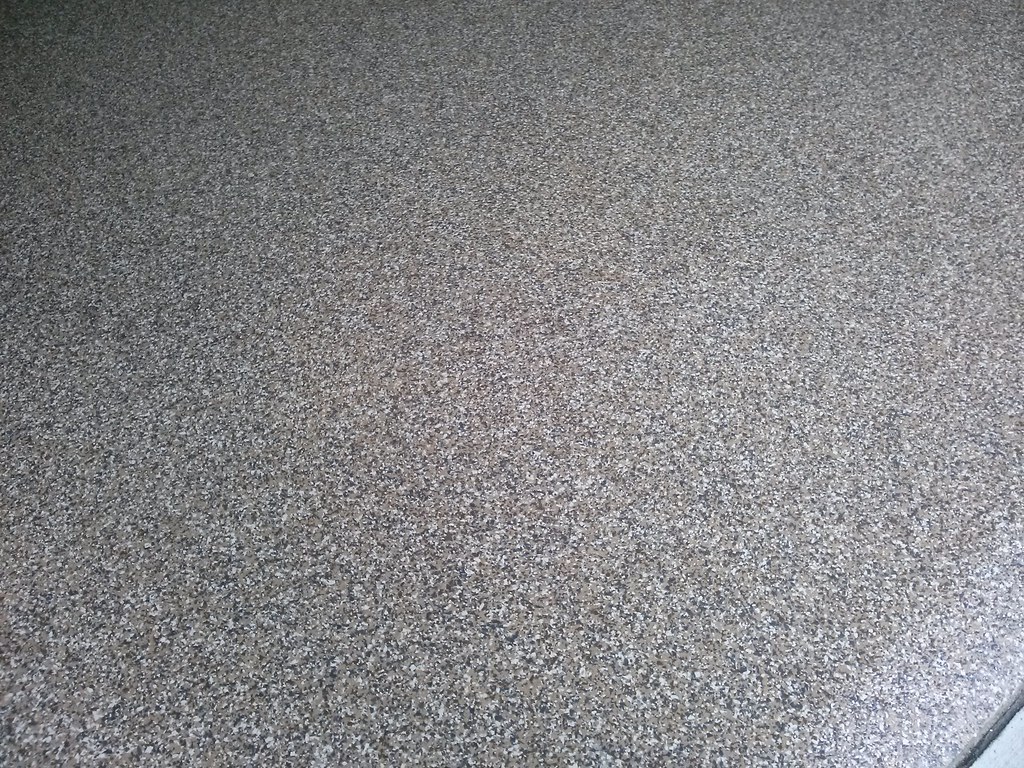
Every coating company in North Texas advertises the one-day floor, and almost none explain what the day is worth. Polyaspartic reaches walk-on hardness in a handful of hours and takes vehicle weight the next day, where a conventional epoxy build wants two to four days of an empty garage before you can park on it. The real question is whether the days you save are worth anything to you.
For a Carrollton homeowner with a two-car garage and a driveway to park in, the answer is often no, and we will say so. Three days of parking outside in April costs you nothing. Pay for the chemistry because of what it does in year six, not because of what it does on Tuesday. For a body shop off Belt Line, a fleet bay near the Trinity Mills corridor, or a restaurant kitchen that closes for one night and one night only, the math flips completely, and the coating stops being a finish decision and starts being a scheduling decision. The same goes for the homes around Old Downtown Carrollton where the garage has become a gym or a workshop and the room is genuinely in daily use. Cody will ask what the space does before quoting anything, which is why two neighbors on one street can get two different recommendations from us on the same afternoon.

UV Stability Is Chemistry, Not a Marketing Line
Ordinary epoxy resin is not light-stable. Put it under direct sun and the molecular structure reacts, which shows up as ambering: the clear goes warm, then yellow, then chalky at the surface. Nobody applies a coating hoping for that. It happens because the material was never built for the exposure it ended up getting. Polyaspartic is an aliphatic chemistry, and aliphatic simply means the part of the molecule that reacts to sunlight is not there to react. The clarity is not maintained by an additive that wears off. It is a property of the resin. An interior slab that never sees daylight has no UV problem to solve, and we spec accordingly rather than upselling a chemistry with nothing to do.
Hot-Tire Pickup Is a Softening Problem
Hot-tire pickup gets described as an adhesion failure, and that is only half true. What actually happens is thermal. A tire coming off the Bush Turnpike in August is hot, the rubber is soft and slightly tacky, and it parks on a slab that has been absorbing heat all day through a south-facing door. If the coating softens even slightly at that temperature, the tire and the finish reach a point where the bond between them briefly beats the bond between the finish and the concrete. Move the car the next morning and the coating leaves with the tire in a curl.
So the property that prevents it is hardness retention at temperature, and that is where polyaspartic separates itself. It holds a higher glass transition point than standard epoxy clears, meaning it stays in its hard, glassy state at slab temperatures that push a lesser coating toward soft. Carrollton garages get there routinely. The Houston Black clay under these slabs holds heat, the concrete radiates it back into the room through the evening, and a closed garage in late summer stays warm long after sunset.
Prep still carries most of the load. A polyaspartic clear over a slab that was never properly opened up will fail at the bond line regardless of how hard the topcoat is, and we have ground out enough of those to know how the story ends. Every one of our systems starts with diamond grinding to a measured profile and a moisture reading we take ourselves rather than assume. XPS-certified prep is the reason the topcoat gets to do its job at all.
Carrollton polyaspartic coatings.
Send photos of the slab and we will tell you honestly whether a clear coat is enough or whether the floor underneath needs work first.
A Short Working Window Rewards an Organized Crew
The property that makes polyaspartic fast is the same property that makes it unforgiving. Once the two components meet, the pot life is measured in minutes, not the comfortable half hour epoxy allows. Mix more than the crew can lay down and it firms up in the bucket. Hesitate mid-pass and you get a lap line that will not blend out. There is no going back and feathering it later, which is why a rushed or understaffed crew produces a visibly worse polyaspartic floor than the same crew produces in epoxy.
What that demands is choreography. Batches sized to what the applicator can move before it sets. One person mixing and nothing else. A wet edge held across the whole run, and the perimeter cuts done before the field goes down rather than during. On a Carrollton install we stage the entire floor and pre-measure every component before a single kit is opened, because once it starts there is no pausing to fetch something from the truck. The fixed-price quote we give you after walking the space reflects the crew size the job genuinely needs, since a polyaspartic floor installed by two people who should have been four is cheaper on the invoice and worse on the ground.
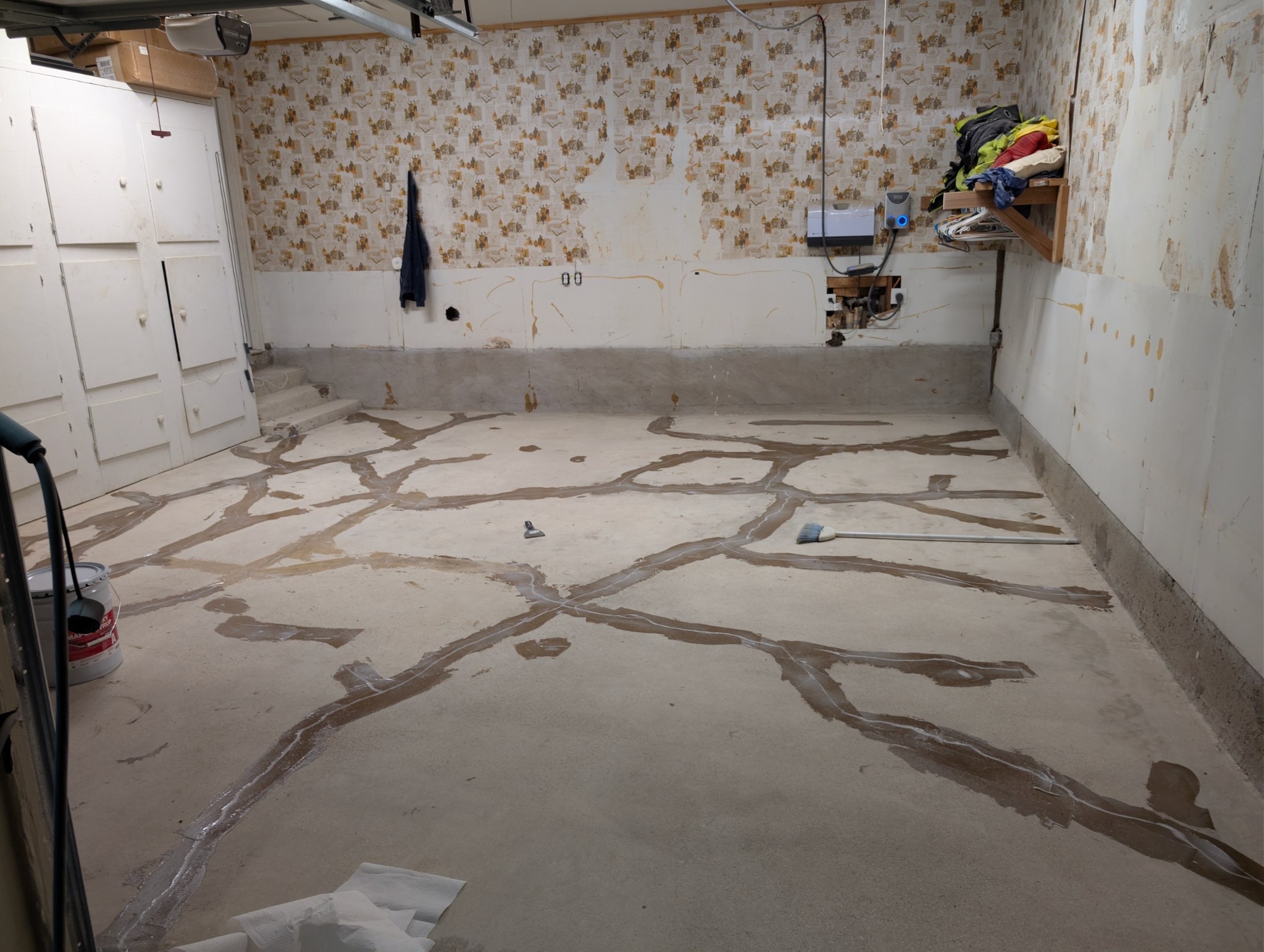
Carrollton slabs add one more variable. This city runs mid-century construction from the 1970s and 1990s right alongside newer master-planned subdivisions, and the two behave nothing alike under a coating. We settle the crack work and the moisture question before the clear is ever mixed, because doing it in that order is what keeps the short working window from becoming a problem.
Usually the Clear, Occasionally the Whole Floor
Most Carrollton polyaspartic work we do is not a polyaspartic floor. It is a flake broadcast with a polyaspartic clear over it, and that arrangement exists because each layer is doing the thing it is best at. The flake supplies the color, the texture underfoot, and the visual forgiveness that hides the ordinary dust and tire marks a working garage collects. The clear supplies the hardness, the light stability, and the sealed surface you can actually mop. Ask polyaspartic to be the entire floor on bare gray concrete and you get a thin, glassy finish that shows every scuff and every imperfection the slab already had.
Beyond the garage, the same clear goes over quite a lot of Carrollton concrete. Covered patios and outdoor kitchens keep their finish through summers that would chalk an epoxy clear. Pool decks get a slip-rated texture broadcast into the coat so wet feet have something to hold. When several of those surfaces are on one property, we sequence them across one visit and schedule each pour for the part of the day when the slab temperature is right. All of it carries the same written workmanship warranty. The clear is the part you look at. The grind underneath decides how long you get to keep looking at it.
Carrollton Polyaspartic Coatings FAQ
Is the one-day turnaround worth the extra cost?
It depends entirely on what the room does. If you have a driveway and the garage holds storage, a slower epoxy build costs you nothing and we will happily quote that instead. If you run a shop, a fleet bay, or a kitchen where each closed day is lost income, or the garage is a gym you use daily, the fast return pays for itself immediately.
Why does polyaspartic not turn yellow like epoxy does?
Because of the resin itself, not an additive. Polyaspartic is an aliphatic chemistry, which means the molecular structure that reacts to sunlight in standard epoxy is not present, so the clarity does not depend on a UV blocker that wears down. On a west-facing Carrollton garage or a covered patio that difference shows up within a couple of seasons.
Will it stop hot-tire pickup in an August garage?
That is one of the main reasons we use it. Hot-tire pickup is a softening problem, and polyaspartic holds its hardness at the slab temperatures Carrollton garages actually reach in late summer. Prep still matters just as much, since a soft bond line fails no matter how hard the top layer is.
Can I get polyaspartic on its own without flake?
You can, but on bare concrete a clear layer alone is thin and glassy and shows every scuff and flaw the slab already has. In most Carrollton homes it works better as the clear over a flake broadcast, where the flake handles color and hides ordinary wear. A standalone coat makes sense over an existing sound floor that just needs refreshing.
Does an older Carrollton slab need different handling?
Yes. Homes from the 1970s and 1990s sit on concrete that is thirstier and moves more with the Houston Black clay under it than the newer master-planned subdivisions do. We chase and fill cracks mechanically, isolate where seasonal movement warrants it, and confirm the repairs before coating. Slab age is the biggest driver of prep scope, which is why we measure before quoting.
Does the fast cure make the install harder to get right?
It does, and that is worth knowing before you hire anyone. Pot life is minutes rather than a half hour, so a mis-sized batch sets in the bucket and a pause mid-pass leaves a lap line you cannot blend out later. We stage the whole floor before opening a kit and crew the job for the size it actually is. It is not a material a first-timer should learn on.
Other Carrollton Epoxy Services
All Carrollton, TX services · Dallas County service area · See finished floors · Get a fixed-price quote
Service Area: Carrollton, TX
We install polyaspartic coatings across Carrollton and the surrounding Dallas County towns, including Old Downtown Carrollton, Hebron, Indian Creek, Castle Hills, and both the west and east sides of the city. Carrollton sits about thirty to forty-five minutes from our Dallas shop depending on the hour, and we crew up here regularly enough that same-week scheduling is often possible when your project lines up with a trip we already have booked.